


What's Happening?
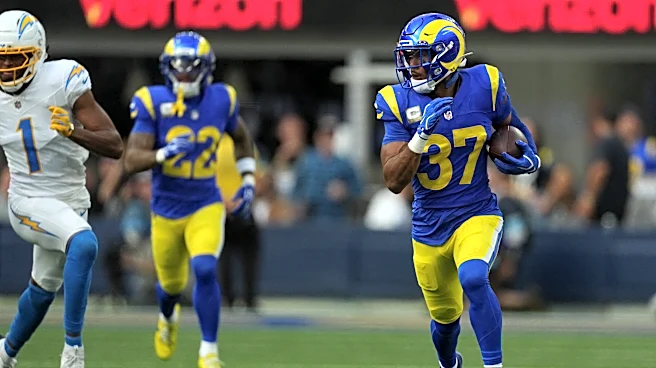
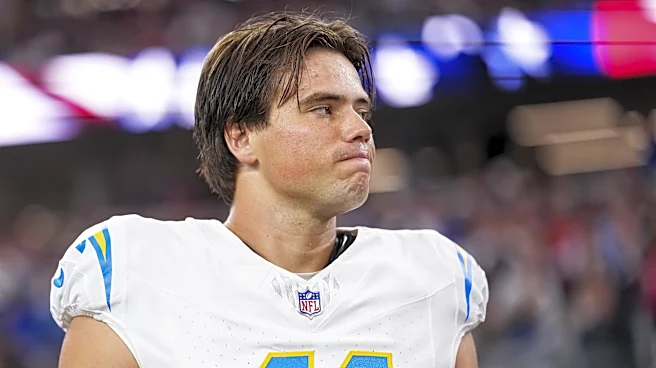
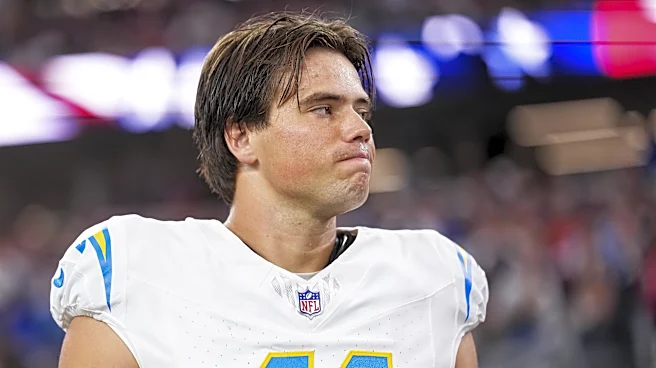
Los Angeles Rams safety Quentin Lake has issued a direct apology to Los Angeles Chargers quarterback Justin Herbert following mocking comments made by Lake after the Rams' Week 8 victory over the Chargers. Lake confirmed to reporters on Friday that he texted
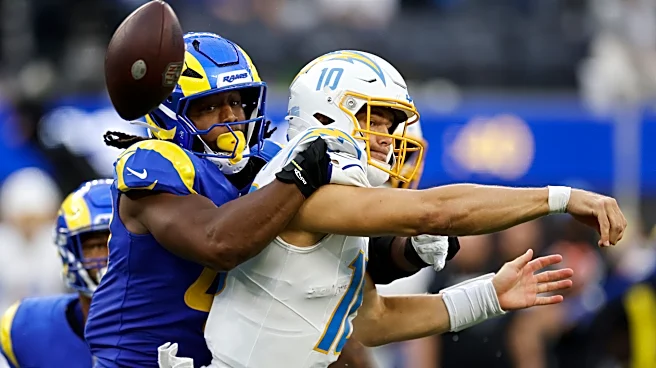
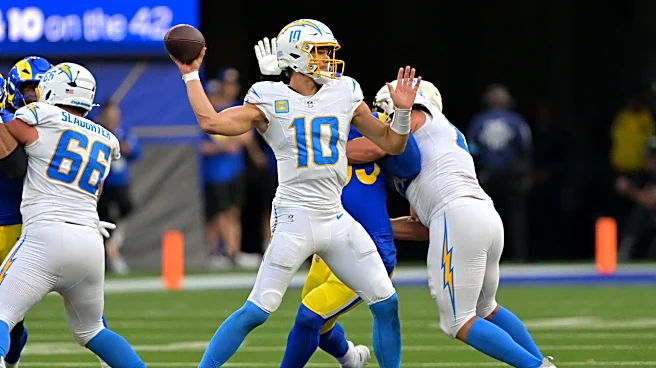
Herbert to express his regret. The apology comes days after Lake appeared on a podcast where he criticized Herbert's performance, stating that the quarterback was 'throwing deli meat' and 'seeing ghosts' during the game. The Rams defeated the Chargers 24-9 in the matchup held at SoFi Stadium in Inglewood, California. During that game, Herbert threw two interceptions and no touchdowns, leading to the Chargers' 0-7 record for the season. Lake indicated he was unsure if Herbert had read the apology, acknowledging that Herbert might not care about the comments at this point. However, Lake felt it was important to clarify that his remarks were not intended to be disrespectful.
Why It's Important?
This incident highlights the intense scrutiny and pressure professional athletes face, both on and off the field. Post-game comments, especially those made in public forums like podcasts, can quickly escalate and create tension between players and teams. For Justin Herbert, a prominent quarterback, such remarks can add to the psychological burden of a challenging season, as the Chargers are currently struggling with a 0-7 record. For Quentin Lake, the apology demonstrates an attempt to manage his public image and potentially de-escalate any personal animosity that might arise from his initial comments. Such apologies are crucial in maintaining a level of sportsmanship within professional leagues, even amidst fierce competition. The situation also underscores the impact of social media and digital platforms in amplifying player interactions and their consequences.
What's Next?
Given that the Rams and Chargers will not face each other again in the current regular season, any direct on-field resolution between Lake and Herbert will be delayed. The effectiveness of Lake's apology will largely depend on Herbert's reception and whether he chooses to acknowledge it publicly or privately. For the Chargers, the focus will remain on improving their performance and turning around their winless season, with Herbert's leadership being critical. For Lake and the Rams, the incident serves as a reminder of the need for careful communication, especially when discussing opponents. Future interactions between the two players, potentially in subsequent seasons or off-season events, could reveal the lasting impact of this exchange. The broader sports media will likely monitor any further developments or comments from either player regarding the apology.
Beyond the Headlines
This event touches upon the broader culture of sports commentary and the fine line between competitive banter and disrespectful criticism. In an era where athletes often engage directly with fans and media through various platforms, the potential for controversial statements has increased. Lake's comments, while perhaps intended as lighthearted post-game analysis, crossed a line for some, necessitating an apology. This situation also reflects on the mental health aspect of professional sports, where players are constantly under pressure and subject to public judgment. The act of apologizing, even if not immediately accepted, can be a step towards fostering a more respectful environment within professional sports. It also raises questions about the responsibility of athletes when participating in podcasts or other media, and how their words can impact their peers and the league's image.