




What's Happening?
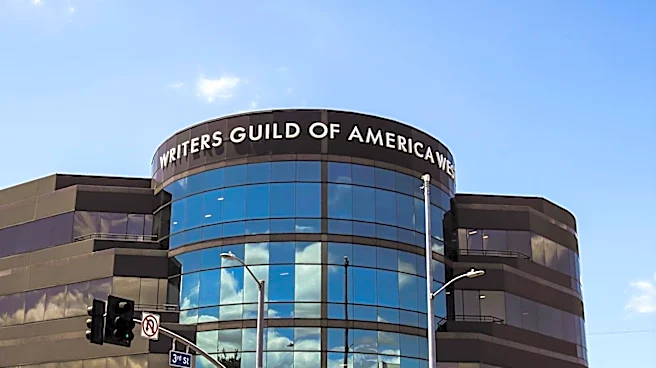
Writers Guild of America West (WGAW) members are increasingly incorporating labor-themed storylines into television series, drawing inspiration from their own experiences as union members and recent strike waves. Writers from shows like 'Abbott Elementary,'
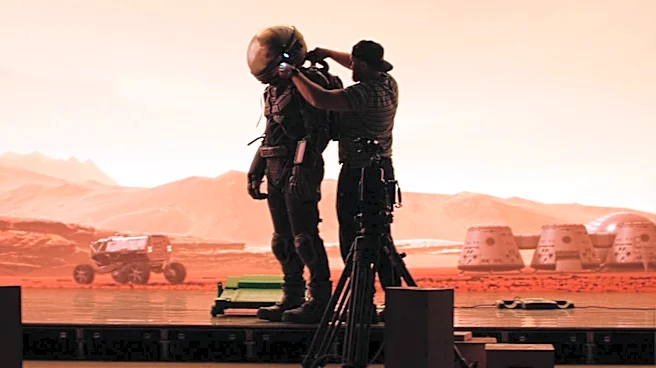
'Superstore,' 'For All Mankind,' and 'The Simpsons' have crafted narratives focusing on worker unrest, unionization efforts, and the impact of strikes. Riley Dufurenna, a writer for 'Abbott Elementary,' drew on the 2023 WGA strike to inform an episode about a transit worker strike. L.E. Correia of 'Superstore' explored unionizing efforts in a retail setting, while Andrew Black of 'For All Mankind' depicted a labor strike on a Martian colony. Cesar Mazariegos, co-EP of 'The Simpsons,' created an episode about Marge Simpson unionizing a ghost kitchen, inspired by Proposition 22. These writers aim for accuracy in their portrayals, often consulting with labor organizers, and view their work as contributing to a broader understanding of working-class struggles and the importance of organized labor.
Why It's Important?
This trend is significant as it brings nuanced and often personal perspectives on labor issues to mainstream television, reflecting and shaping public discourse on workers' rights, economic inequality, and the role of unions in the U.S. By depicting these struggles, writers are not only entertaining but also educating audiences about the complexities of labor movements, the challenges faced by working-class individuals, and the power dynamics within workplaces. This can foster greater empathy and understanding among viewers, potentially influencing public opinion and support for labor causes. For the entertainment industry itself, it signifies a growing willingness to tackle socially relevant themes, moving beyond traditional narratives to explore the realities of contemporary work life. The accuracy sought by these writers also lends credibility to their portrayals, making the stories more impactful and resonant with real-world experiences.
What's Next?
The increased focus on labor themes in television is likely to continue, especially given the recent high-profile strikes by the WGA and SAG-AFTRA. We can anticipate more shows exploring unionization, worker exploitation, and the broader economic challenges faced by various industries. This could lead to a richer and more diverse range of narratives on television, moving beyond traditional workplace dramas to incorporate more explicit discussions of labor politics and economic justice. Writers may continue to draw from current events and their own union experiences, ensuring that these storylines remain timely and relevant. Furthermore, the success and critical acclaim of such episodes might encourage more showrunners and networks to greenlight projects that delve into these topics, potentially leading to a new wave of labor-focused content across different genres.
Beyond the Headlines
Beyond the immediate impact on television programming, this trend has deeper cultural and political implications. By normalizing discussions about unions and worker solidarity, these shows can contribute to a shift in public perception, potentially counteracting negative stereotypes about organized labor. This cultural shift could empower real-world labor movements by providing relatable narratives that resonate with a wider audience. Ethically, these stories raise important questions about corporate responsibility, fair wages, and the dignity of labor, prompting viewers to consider their own roles within economic systems. The portrayal of collective action and its potential for change can also serve as a form of civic education, illustrating how individuals can organize to advocate for their rights. This artistic engagement with labor issues reflects a broader societal reckoning with economic inequality and the future of work in the U.S., using the powerful medium of storytelling to explore and influence these critical debates.