








What's Happening?
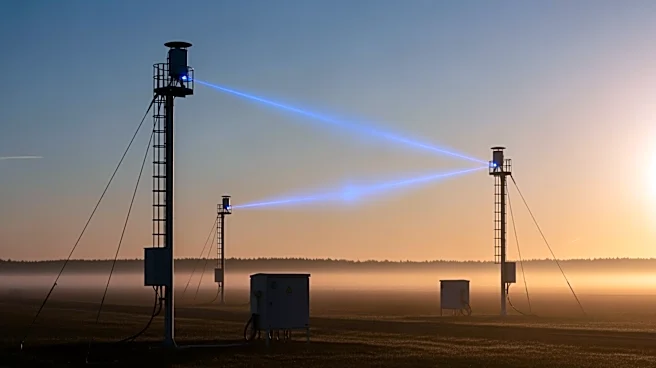
TotalEnergies has introduced MethaneLive, a global methane emissions monitoring center that utilizes real-time data, advanced analytics, and artificial intelligence to detect and mitigate methane emissions across its operated upstream assets. The company
has deployed approximately 13,000 sensors across all its onshore and offshore sites, establishing what it claims to be the industry's most extensive permanent real-time methane monitoring system. Since its operational launch in early 2026, MethaneLive has identified 35 fugitive methane emissions that would have been challenging to detect using traditional methods. The platform integrates continuous sensor data with advanced algorithms to pinpoint emissions, determine their root causes, and suggest corrective actions. TotalEnergies aims to achieve near-zero methane emissions at its operated upstream facilities by 2030, focusing on enhancing emissions measurement and accelerating efforts to identify and reduce methane releases.
Why It's Important?
The deployment of MethaneLive by TotalEnergies represents a significant advancement in the energy sector's efforts to address climate change by reducing methane emissions, a potent greenhouse gas. This initiative not only underscores the company's commitment to sustainability but also sets a benchmark for the industry in terms of environmental responsibility. By leveraging real-time data and artificial intelligence, TotalEnergies is enhancing the reliability, safety, and efficiency of its operations, which could lead to broader adoption of similar technologies across the industry. The initiative supports global efforts to combat climate change and aligns with international goals to reduce greenhouse gas emissions. Additionally, the use of AI in monitoring and maintenance could lead to cost savings and operational efficiencies, benefiting the company's bottom line and potentially influencing industry standards.
What's Next?
TotalEnergies plans to continue expanding its use of artificial intelligence across its exploration and production operations. The company is developing its next-generation Pangea 5 supercomputer, expected to increase computing capacity sixfold by 2027, to support growing AI and digital workloads. This development will enhance the company's ability to monitor equipment and optimize maintenance planning, further improving operational efficiency. As TotalEnergies progresses towards its 2030 target of near-zero methane emissions, it may influence regulatory frameworks and encourage other companies to adopt similar technologies. The success of MethaneLive could lead to increased collaboration with governments and environmental organizations to establish industry-wide standards for methane emissions monitoring and reduction.