
What's Happening?
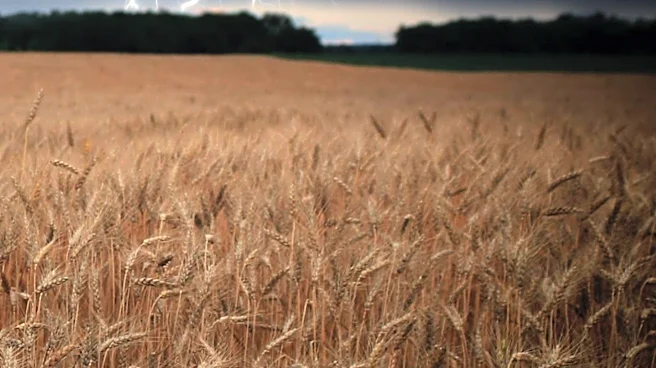
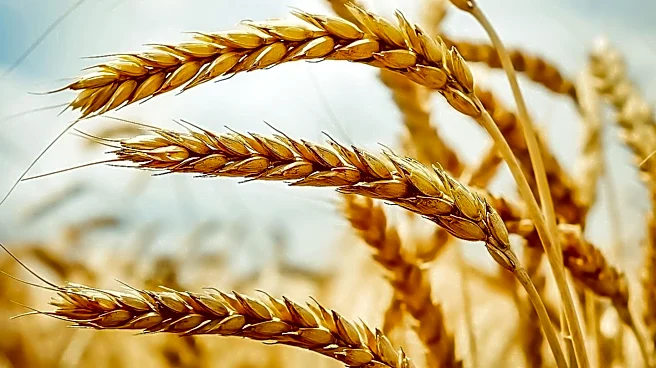
Chicago wheat prices have increased, marking a potential fourth consecutive weekly gain, driven by supply concerns in the Black Sea region. The ongoing conflict between Russia and Ukraine has led to attacks
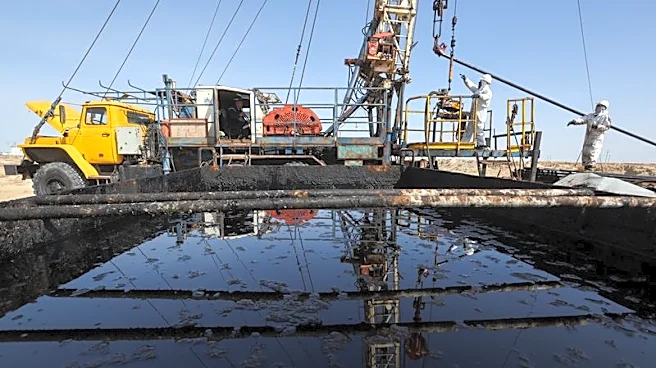
on grain ships and port infrastructures, disrupting the peak export season. As a result, buyers are seeking alternative sources for wheat. The most active wheat contract on the Chicago Board of Trade rose by 0.3% to $6.98-1/2 per bushel. Soybeans and corn also saw price increases, with soybeans trading at $12.45-3/4 per bushel and corn at $4.88-1/4 per bushel. The rise in crude oil prices has further supported the soybean and corn markets, as these agricultural products are increasingly used in biofuel production.
Why It's Important?
The disruption in the Black Sea region, a critical area for global grain exports, has significant implications for global food supply chains. The attacks on infrastructure and ships have heightened concerns about the availability of wheat, prompting price increases. This situation underscores the vulnerability of global agricultural markets to geopolitical tensions. The rise in wheat prices could lead to increased costs for food manufacturers and consumers, potentially impacting food security. Additionally, the increased use of agricultural products for biofuels, driven by higher crude oil prices, may further strain food supplies and contribute to inflationary pressures in the food sector.
What's Next?
If the conflict in the Black Sea region persists, it is likely that wheat prices will continue to rise, prompting further shifts in global trade patterns as countries seek alternative suppliers. The situation may also lead to increased diplomatic efforts to stabilize the region and secure grain exports. In the U.S., agricultural stakeholders may need to adjust their strategies to accommodate changing market dynamics, including potential increases in domestic production to meet global demand. Monitoring geopolitical developments and their impact on agricultural markets will be crucial for policymakers and industry leaders.