









What's Happening?
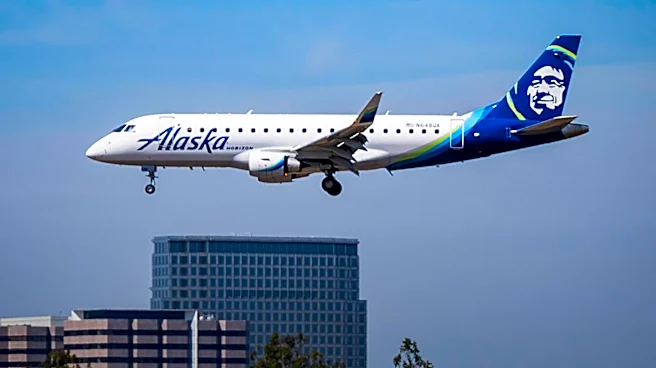
Alaska Airlines has announced the launch of new direct flights from Anchorage, Alaska, to Tokyo, Japan, starting in May 2027. This international route will operate daily to Tokyo's Narita International Airport until September 2027, with three nonstop
flights per week continuing into the winter season from January 2028. In addition to the Tokyo service, the airline is introducing new seasonal nonstop flights from Anchorage to three U.S. cities: Austin, Texas; Nashville, Tennessee; and Dallas-Fort Worth, Texas. These domestic routes will run on Saturdays from June to August 2027. The announcement was made by Marilyn Romano, Regional Vice President for Alaska Airlines, at the Ted Stevens Anchorage International Airport. This expansion comes shortly after Alaska Airlines reported a $147 million quarterly loss, primarily attributed to high fuel prices. Despite the financial setback, Romano stated that the company views these new routes as a strategic move to attract more passengers and build for the future.
Why It's Important?
This expansion by Alaska Airlines is significant for several reasons. Firstly, the direct flight to Tokyo marks a major step in connecting Alaska more directly with the Asia-Pacific region, potentially boosting tourism and trade between the state and Japan. Governor Mike Dunleavy and Anchorage Mayor Suzanne LaFrance highlighted the economic benefits, including increased tourism supporting local businesses and encouraging new investments in Alaska. Secondly, the new domestic routes to Austin, Nashville, and Dallas-Fort Worth enhance connectivity for Alaskans to key U.S. markets, offering more travel options and potentially stimulating inbound tourism. Thirdly, the airline's decision to proceed with this aggressive expansion despite a recent $147 million quarterly loss demonstrates a long-term strategic vision. It indicates a commitment to growth and market share, even when facing immediate financial challenges like high fuel costs. This move could position Alaska Airlines more competitively in both the international and domestic travel markets, aiming to offset current losses through future passenger volume and network strength.
What's Next?
The new direct flights from Anchorage to Tokyo are scheduled to commence on May 13, 2027, and the seasonal U.S. domestic flights will begin on June 12, 2027. Alaska Airlines will be utilizing a Boeing 737 MAX 8 for the Anchorage-Tokyo route. The airline's strategy to 'win' by expanding its network suggests a continued focus on route development and passenger acquisition. Future developments may include monitoring the performance of these new routes, particularly the international service to Tokyo, to assess their impact on the airline's financial health and market position. The company will likely continue to evaluate fuel costs and other operational expenses, which were cited as the primary reason for the recent quarterly loss. Stakeholders, including local businesses in Anchorage and the newly connected U.S. cities, will be observing the economic impact of increased tourism and travel. The airline's ability to sustain and grow these new services will depend on passenger demand and its overall financial recovery.
Beyond the Headlines
The introduction of direct flights from Anchorage to Tokyo carries deeper implications beyond immediate economic benefits. It underscores Alaska's strategic geographical position as a gateway between North America and Asia, potentially revitalizing its role in international travel and commerce. Historically, Anchorage has been a significant air cargo hub, and this new passenger route could complement existing cargo operations, fostering a more integrated air transport ecosystem. The move also reflects a broader trend in the airline industry where carriers are seeking to diversify their networks and tap into new markets, even in the face of economic headwinds. For Alaska, enhanced connectivity could lead to increased cultural exchange and investment opportunities, strengthening its ties with Japan and other Asian economies. Furthermore, the airline's decision to push forward with expansion despite a quarterly loss highlights the long-term, capital-intensive nature of the aviation business, where strategic investments are often made with a multi-year outlook rather than being solely dictated by short-term financial fluctuations.