







What's Happening?
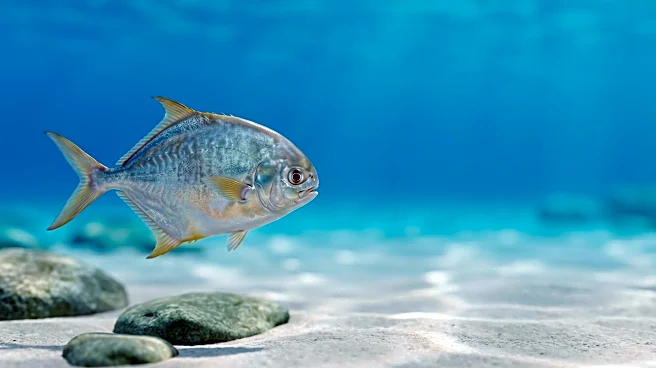
A study evaluated the efficacy of a host gut-derived multi-strain marine probiotic consortium (MPC) on the growth performance, gut health, serum immunity, and disease resistance of Indian pompano, Trachinotus mookalee. Researchers isolated five beneficial
bacterial species (Bacillus pumilus, B. subtilis, Shewanella algae, S. amazonensis, and Pseudoalteromonas sp.) from the gastrointestinal tract of healthy Indian pompano. These isolates were then combined into three different consortia. The most effective consortium, MPC2, which included all five bacterial species, significantly enhanced the mean length, mean weight, average daily growth rate, and specific growth rate of the Indian pompano across different phases of their culture. Additionally, MPC2 supplemented diets improved the gut health by significantly reducing Vibrio loads and enhanced immuno-hematological parameters, including increased red and white blood cell counts and improved enzyme activities.
Why It's Important?
This research holds significant implications for the aquaculture industry, including potential applications in the U.S. The successful use of host gut-derived probiotics to improve growth, immunity, and disease resistance in fish offers a sustainable alternative to traditional methods, such as antibiotics, which are increasingly scrutinized due to concerns about antibiotic resistance. For U.S. aquaculture, which faces challenges in maintaining fish health and optimizing production efficiency, this study provides a promising model. By enhancing the health and growth rate of farmed fish, such probiotic interventions can lead to higher yields, reduced mortality rates, and ultimately, greater economic viability for fish farms. This could contribute to a more robust and environmentally friendly seafood supply chain in the U.S., reducing reliance on wild-caught fish and improving food security.
What's Next?
The study suggests that the application of MPC2 at specific concentrations during different life stages (larval, nursery, and grow-out phases) is an effective strategy for improving the health and productivity of Indian pompano. The next steps would likely involve further research to validate these findings in other fish species relevant to U.S. aquaculture and to optimize the probiotic formulations for commercial use. This could include large-scale field trials and regulatory assessments to ensure the safety and efficacy of these marine probiotics for widespread adoption. There is also potential for exploring the mechanisms by which these multi-strain probiotics interact with the host immune system and gut microbiome, which could lead to the development of even more targeted and effective aquaculture health solutions. Collaboration between researchers, aquaculture producers, and regulatory bodies will be crucial for translating these findings into practical applications.
Beyond the Headlines
The development of host gut-derived multi-strain marine probiotics represents a sophisticated approach to animal health, moving beyond broad-spectrum interventions to tailored biological solutions. This method aligns with the growing understanding of the microbiome's critical role in health and disease across all living organisms. Ethically, this approach could lead to more humane and sustainable farming practices by reducing stress and disease incidence in farmed fish, which is a significant concern for animal welfare advocates. Environmentally, by potentially reducing the need for chemical treatments and antibiotics, these probiotics could lessen the ecological footprint of aquaculture. This research also highlights the vast untapped potential of marine biodiversity as a source of novel therapeutic and nutritional agents, encouraging further exploration of marine ecosystems for biotechnological innovations that could benefit various sectors, including human health.