






What's Happening?
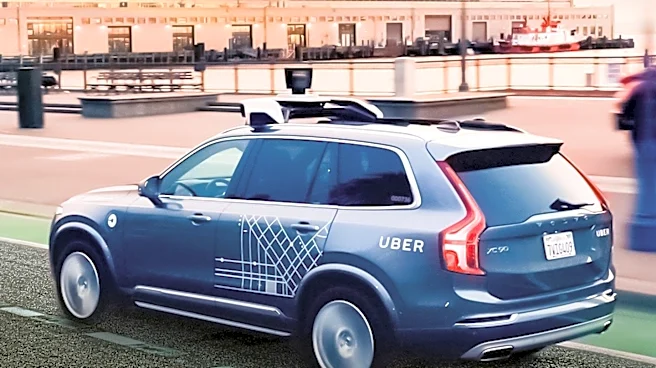
Uber has initiated autonomous ride services in Zagreb, Croatia, marking the first time riders in Europe can book a self-driving vehicle through the Uber app. This service is a collaboration between Pony.ai, which provides the autonomous driving technology,
Verne, acting as the fleet owner and service operator, and Uber, integrating the service into its global mobility platform. Initially, a licensed operator will be present in the autonomous vehicles to monitor operations, with plans to transition to fully driverless operations in the future. The service is currently available in key areas of Zagreb, including the city center, and is expected to expand its availability and geographic coverage over time. This launch follows a partnership announced in March, moving the service from development and testing to real-world deployment.
Why It's Important?
This expansion of autonomous vehicle services into Europe by Uber signifies a significant step in the global adoption of self-driving technology in ride-hailing. For the U.S. technology and automotive industries, it demonstrates the increasing viability and international market potential for autonomous driving solutions developed by companies like Pony.ai. The model of collaboration between a technology provider, an operator, and a ride-hailing platform could become a blueprint for future deployments, influencing investment and development strategies in the autonomous vehicle sector. While the immediate impact is in Europe, successful implementation could accelerate regulatory discussions and public acceptance of AVs in the U.S., potentially leading to faster deployment of similar services domestically. It also highlights Uber's strategy to remain a dominant player in the evolving mobility landscape by integrating advanced technologies.
What's Next?
Uber and its partners plan to expand the autonomous ride service to additional European cities, with further details on these new markets expected later this year. The companies will continue to work towards fully autonomous operations, gradually phasing out the need for on-board human operators. This phased approach will likely involve continuous testing, data collection, and refinement of the technology and operational framework to ensure safety and efficiency. The success of the Zagreb launch will be crucial in demonstrating the scalability and reliability of this model, potentially influencing regulatory bodies and public perception across Europe and beyond. The ongoing development will also provide valuable insights for the broader autonomous vehicle industry regarding deployment strategies and consumer adoption.
Beyond the Headlines
The introduction of autonomous ride services raises deeper questions about the future of work, particularly for human drivers in the ride-hailing industry. While Uber states that autonomous vehicles and human drivers will coexist, the long-term trend points towards increasing automation, which could lead to significant shifts in employment patterns. This development also highlights the ethical and legal frameworks that need to evolve to address accidents involving autonomous vehicles, data privacy, and the responsibility of various stakeholders in the AV ecosystem. Furthermore, the integration of AVs into urban environments will necessitate changes in infrastructure planning, traffic management, and public transportation systems, potentially reshaping cityscapes and daily commutes in profound ways. The public's trust and acceptance of these technologies will be a critical factor in their widespread adoption.