








What's Happening?
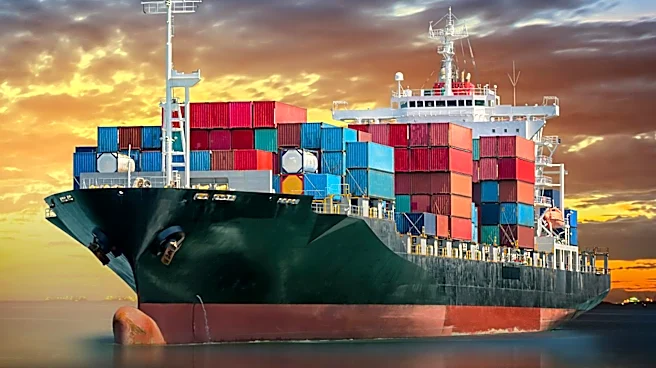
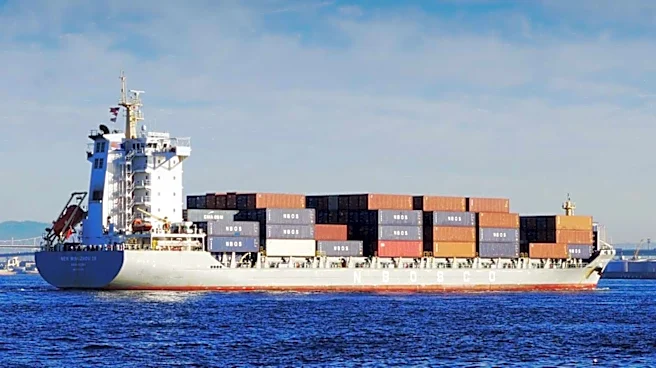
U.S. container import volumes are experiencing an unexpected surge, with September projected to be the highest volume month of the year, according to the National Retail Federation (NRF). This revised outlook comes after earlier forecasts anticipated
a slowdown. Jonathan Gold, NRF Vice President for Supply Chain and Customs Policy, stated that consumers continue to purchase despite tariffs, inflation, and high fuel prices, leading retailers to maintain high inventory levels to meet demand. The NRF's Global Port Tracker now forecasts total volumes of 2.31 million TEU for September, an increase from earlier projections as low as 2 million TEU. July already exceeded previous expectations with 2.3 million TEU, and August is estimated to be around 2.29 million TEU, making it the third busiest month of the year. The Port of Los Angeles also reported strong volumes, with August being 6% above its five-year average.
Why It's Important?
This sustained high volume of imports has significant implications for the U.S. economy and supply chain. It indicates robust consumer demand, which, while positive for retailers, also contributes to ongoing inflationary pressures. The unexpected strength in imports challenges previous assumptions about a looming economic slowdown, suggesting greater resilience in consumer spending than anticipated. However, it also places continued strain on port infrastructure and logistics networks, potentially leading to congestion and delays. The NRF's revised forecast for 2026, now projecting a 1% increase in total TEU over 2025, highlights the dynamic and often unpredictable nature of global trade and its direct impact on U.S. businesses and consumers. This situation affects various stakeholders, from shipping companies and port workers to retailers and end consumers, all of whom must adapt to these fluctuating demand patterns.
What's Next?
While September is projected to be a peak month, the NRF still anticipates a slowdown in the coming months. They forecast October's volume to drop by over 2.1% but remain 1.7% higher than last year. November and December are expected to level off at around 2 million TEU per month, with this trend carrying into January 2027, which is projected to be down 1% compared to January 2026. Factors contributing to current delays include bad weather in Asia, such as typhoons impacting Chinese ports, and rerouting of carriers due to Panama Canal restrictions caused by drought. Retailers and logistics providers will need to continue adapting to these evolving conditions, managing inventory, and optimizing supply chain routes to mitigate potential disruptions and meet consumer demand during the holiday season and beyond.
Beyond the Headlines
The persistent strength in U.S. import volumes, despite economic headwinds, points to a complex interplay of factors influencing consumer behavior and global trade. The NRF's observation that consumers are still buying despite tariffs, inflation, and high fuel prices suggests a deeper resilience or perhaps a shift in spending priorities. This could also reflect a strategic decision by retailers to build up inventory in anticipation of future supply chain challenges or to avoid stockouts experienced during previous disruptions. The ongoing issues with the Panama Canal due to drought highlight the increasing vulnerability of critical global trade arteries to climate change, adding another layer of complexity and cost to international shipping. This situation underscores the need for long-term strategic planning in supply chain management, considering both economic and environmental factors.