





What's Happening?
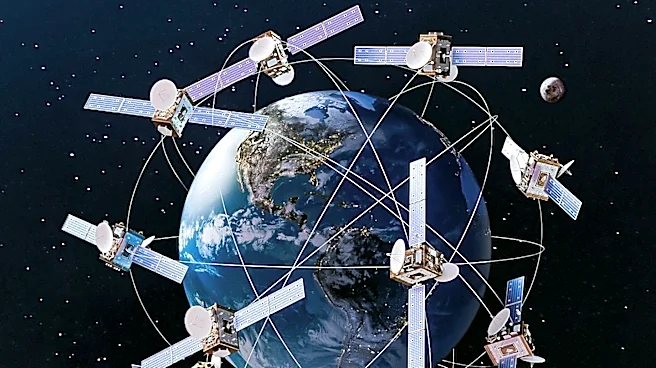
Rakuten Group and U.S.-based AST SpaceMobile have agreed to establish a new company, Rakuten AST, in November 2026. This joint venture aims to construct a direct-to-satellite communications network in Japan, enabling commercially available smartphones
to connect directly to low-Earth orbit (LEO) satellites. The project, selected under the Japanese Ministry of Internal Affairs and Communications' Low-Earth Orbit Satellite Infrastructure Development Project (J-LEO), will receive up to ¥148 billion (approximately $935.4 million) in subsidies over roughly three years through the Communications and Information Network Association of Japan (CIAJ). The goal is to commence domestic operations by the end of March 2029, deploying satellites that support mid-band spectrum. This initiative is designed to enhance Japan's communications infrastructure, particularly in disaster-prone areas and remote regions, by ensuring autonomous and flexible network management by Japanese telecom operators.
Why It's Important?
This joint venture signifies a critical advancement in global satellite-to-smartphone connectivity, with significant implications for the U.S. technology and telecommunications sectors. For AST SpaceMobile, a U.S. company, this partnership with Rakuten not only expands its international footprint but also validates its proprietary space-based cellular broadband technology. The substantial Japanese government subsidy underscores the strategic importance of this technology for national infrastructure resilience and economic security. The ability to provide direct-to-device connectivity without specialized equipment could revolutionize mobile communications, especially in underserved areas or during emergencies. This development could also spur further investment and innovation in the U.S. space technology industry, as other nations may seek similar solutions for their communication needs. The collaboration strengthens AST SpaceMobile's position as a leader in the emerging space-based cellular broadband market, potentially attracting more U.S. and international partners.
What's Next?
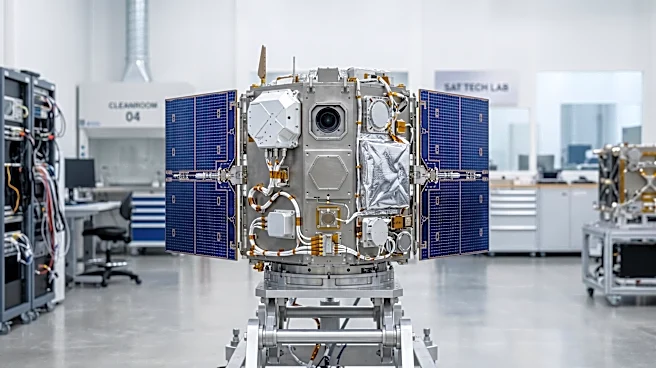
The establishment of Rakuten AST is scheduled for November 2026, with the new company immediately beginning work on deploying and managing satellites compatible with mid-band spectrum. The partners aim to initiate domestic operations of the direct-to-satellite communications network by the end of March 2029. This timeline will involve significant technological development, satellite launches, and regulatory coordination. Rakuten Mobile also plans to conduct commercial-environment testing of its satellite-to-mobile service within 2026, building on its existing strategic partnership with AST SpaceMobile. Beyond high-speed data communications, the companies envision exploring applications in industry-specific solutions, including IoT for logistics, infrastructure monitoring, construction, and agriculture. The success of this project in Japan could serve as a blueprint for similar deployments in other countries, potentially expanding AST SpaceMobile's global reach and influence.
Beyond the Headlines
The formation of Rakuten AST highlights a broader global trend towards enhancing communication infrastructure resilience and autonomy, particularly in the face of increasing natural disasters and geopolitical uncertainties. By placing base-station functions on the ground side, the network design allows Japanese operators to manage and operate the network autonomously, addressing concerns about national sovereignty in critical communication systems. This model could influence how other countries approach the development of their satellite communication capabilities, potentially leading to a more decentralized and nationally controlled global satellite network. Furthermore, the project's focus on eliminating coverage gaps in mountainous areas and remote islands, alongside its disaster resilience, underscores the ethical imperative of ensuring universal access to communication, a principle that could drive future technological advancements and policy decisions in the U.S. and worldwide.