






What's Happening?
Bell has completed the first fuselage for its MV-75 Cheyenne tiltrotor aircraft at its new Kansas plant in Wichita. This milestone comes after Bell began fuselage manufacturing in October 2025 and formally opened the facility on April 27, 2026. The completion
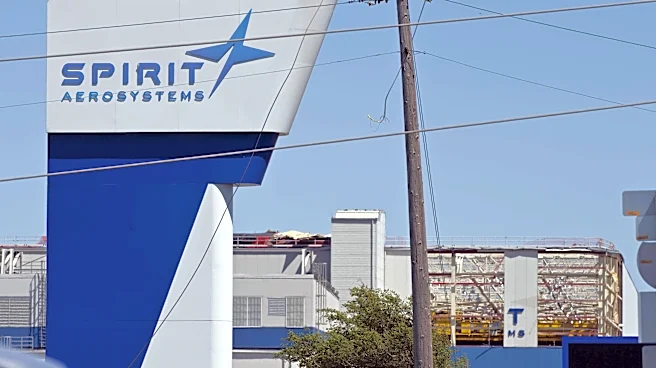
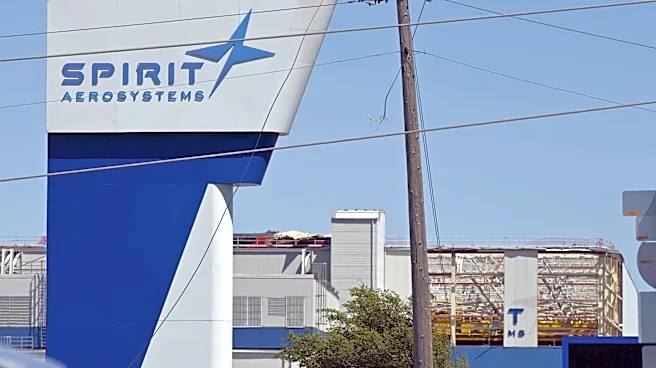
of the fuselage is a significant step in the MV-75 program, which saw Bell take over fuselage fabrication from Spirit AeroSystems. This transition occurred after Boeing acquired Spirit AeroSystems, a company that had previously built the composite fuselage for the original V-280 demonstrator. The MV-75 fuselage is now set to be mated with completed wing and nacelle structures at Bell's Amarillo Assembly Center for further testing. The wing structures were completed earlier in 2026, with the first wing requiring 90% fewer labor hours than the initial V-22 Osprey wing, and the second wing needing an additional 40% less.
Why It's Important?
The completion of the MV-75 Cheyenne fuselage in Wichita highlights a strategic shift in aerospace manufacturing and supply chain dynamics. Bell's decision to bring fuselage fabrication in-house, following Boeing's acquisition of Spirit AeroSystems, underscores a broader industry trend towards vertical integration and control over critical components. This move could enhance Bell's production efficiency and reduce reliance on external suppliers for key aerostructures, potentially leading to faster development cycles and cost efficiencies for future defense programs. The significant reduction in labor hours for the MV-75 wing production compared to the V-22 Osprey indicates advancements in manufacturing processes and technology, which could set new benchmarks for aerospace production. This development is crucial for the U.S. defense sector, as the MV-75 Cheyenne is expected to play a vital role in future military operations, and its efficient production is essential for national security interests.
What's Next?
The completed MV-75 Cheyenne fuselage will now be transported to Bell's Amarillo Assembly Center, where it will be mated with the previously finished wing and nacelle structures. Following assembly, the airframe will undergo rigorous testing in a purpose-built, full-scale structural test fixture. This testing phase will involve calibrating strain gauges and proof-loading the aircraft to assess its structural reliability and safety. Concurrently, the first MV-75 gearboxes are undergoing testing at Bell’s new drive system test lab in Grand Prairie, Texas, while flight control computers, displays, and other systems are being integrated on benches in Arlington. These concurrent development and testing efforts indicate a rapid progression towards the MV-75's first flight and subsequent operational deployment. The successful completion of these stages will be critical for the program's timeline and its eventual integration into military service.
Beyond the Headlines
The shift in fuselage production for the MV-75 Cheyenne, particularly in the context of Boeing's acquisition of Spirit AeroSystems, reflects a strategic realignment within the U.S. aerospace and defense industry. This consolidation could lead to a more streamlined and vertically integrated supply chain for major defense contractors, potentially impacting smaller suppliers and fostering greater competition for specialized manufacturing capabilities. The emphasis on reducing labor hours for wing production also points to a broader industry push towards advanced manufacturing techniques and automation, which could redefine skill requirements and job markets in aerospace. Furthermore, the MV-75 program's progress, driven by these internal manufacturing capabilities, could influence future procurement strategies for the U.S. military, favoring contractors with robust in-house production and technological innovation. This development could also have long-term implications for regional economies, particularly in areas like Wichita, which are significant hubs for aerospace manufacturing.