




What's Happening?
Amazon's grocery chief and Whole Foods CEO, Jason Buechel, has articulated a strategic vision for the company, aiming to evolve Amazon from an 'everything store' into an 'everyday store' by leveraging its grocery business. According to Diane Brady at Fortune,
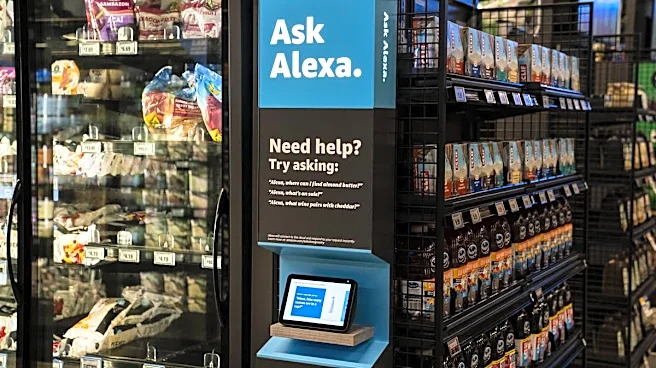
Buechel stated that groceries, which generated over $150 billion in sales for Amazon last year, are key to increasing customer frequency across the entire Amazon platform. The company's current focus for its same-day grocery push is on achieving dependable delivery times rather than prioritizing the fastest possible drop-off. Buechel also acknowledged that Amazon had previously been ahead of consumer demand with innovations like checkout-free Amazon Go stores and palm-scan payments at Whole Foods, both of which have since been de-emphasized as the company shifts its primary focus to same-day grocery delivery.
Why It's Important?
This strategic direction from Amazon's grocery leadership signifies a pivotal shift in the company's long-term growth strategy. By aiming to become an 'everyday store' through groceries, Amazon seeks to embed itself more deeply into consumers' daily routines, thereby increasing overall engagement and spending across its diverse offerings. The emphasis on dependable delivery times over sheer speed indicates a mature understanding of consumer priorities in the grocery sector, where reliability often trumps marginal gains in delivery speed. This approach could build greater customer trust and loyalty, which are critical in the competitive grocery market. Furthermore, Buechel's candid admission about the premature nature of certain past innovations, like Amazon Go, demonstrates a willingness to adapt and refine strategies based on real-world consumer behavior and market feedback. This flexibility is crucial for navigating the complex and rapidly evolving retail landscape, particularly in the high-frequency, low-margin grocery business.
What's Next?
Amazon is expected to continue refining its same-day grocery delivery infrastructure, prioritizing consistency and reliability in its service. This will likely involve further investments in logistics, technology, and operational efficiency to ensure dependable delivery times. The company may also explore new ways to integrate grocery shopping more seamlessly into the broader Amazon ecosystem, encouraging customers to utilize other services and products during their frequent grocery interactions. We might see a continued de-emphasis or re-evaluation of technologies like checkout-free stores and palm-scan payments, as Amazon allocates resources towards its core same-day delivery strategy. Competitors in the grocery and e-commerce sectors will likely observe Amazon's progress closely, potentially adapting their own strategies to focus more on delivery dependability and integrated customer experiences. The success of this 'everyday store' transformation will be a key indicator of Amazon's future growth trajectory in the retail market.
Beyond the Headlines
Amazon's strategic pivot towards becoming an 'everyday store' through groceries represents a fundamental shift in its market positioning, moving beyond transactional e-commerce to a more integrated lifestyle service. This approach has broader implications for consumer behavior, potentially normalizing frequent, small-batch grocery deliveries and further eroding the traditional weekly supermarket trip. The focus on 'dependable delivery times' also highlights an evolving understanding of customer value; in a world saturated with instant gratification, reliability becomes a premium. This could lead to a re-evaluation of what constitutes 'fast' delivery, shifting from absolute speed to predictable and consistent service. Ethically, this strategy could deepen Amazon's data collection on consumer habits, raising questions about privacy and personalized marketing. Culturally, it signifies the continued integration of digital services into the most mundane aspects of daily life, further blurring the lines between online and offline commerce and potentially reshaping urban retail landscapes.