








What's Happening?
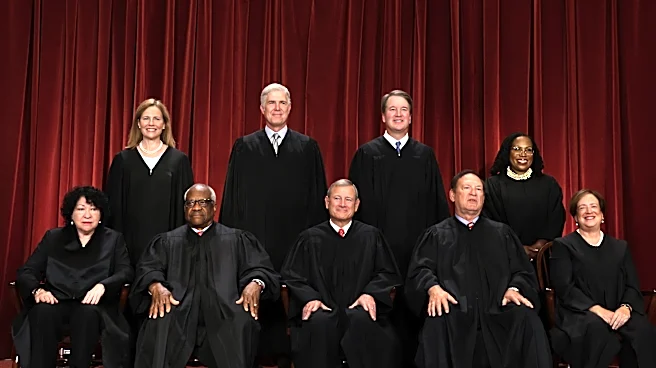
Following a Supreme Court decision in mid-May, the transportation industry is seeing significant changes in how freight brokers vet motor carriers. The case involved a 2017 accident where a truck driver, Montgomery, was severely injured and subsequently
sued the freight broker C.H. Robinson for negligent hiring of an unsafe carrier. The Supreme Court ruled that such negligent-hiring claims fall under the safety exception of the Federal Aviation Administration Authorization Act (FAAAA), emphasizing the need for brokers to avoid unsafe carriers. In response, Cassandra Gaines, CEO of Carrier Assure, introduced the CAVRA (Carrier Assessment, Verification, Risk, and Accountability) Standard. This 54-page framework aims to guide brokers, shippers, and freight forwarders in making defensible carrier selection decisions by focusing on safety data, fraud indicators, and operational red flags.
Why It's Important?
The introduction of the CAVRA Standard is crucial as it provides a structured approach for the transportation industry to mitigate risks associated with carrier selection. The Supreme Court's decision highlights the potential liability brokers face if they fail to adequately vet carriers, which could lead to increased legal scrutiny and financial repercussions. By adopting CAVRA, industry stakeholders can better protect themselves from litigation and ensure safer transportation practices. This development is particularly significant for brokers and shippers who must navigate complex safety and compliance requirements, ultimately impacting the broader logistics and supply chain sectors.
What's Next?
The CAVRA Standard is set to evolve with ongoing industry feedback and educational initiatives. Future plans include webinars and additional tools to aid in the implementation of the standard. As carrier vetting practices and safety data continue to develop, CAVRA aims to remain a dynamic and practical guide for the industry. Stakeholders are encouraged to engage with the framework to refine their vetting processes and adapt to emerging trends in transportation safety and compliance.