



What's Happening?
U.S. retail imports are expected to decrease following an unusually prolonged peak season, but port congestion and unresolved labor negotiations continue to challenge supply chains. According to the latest Global Port Tracker report from the National
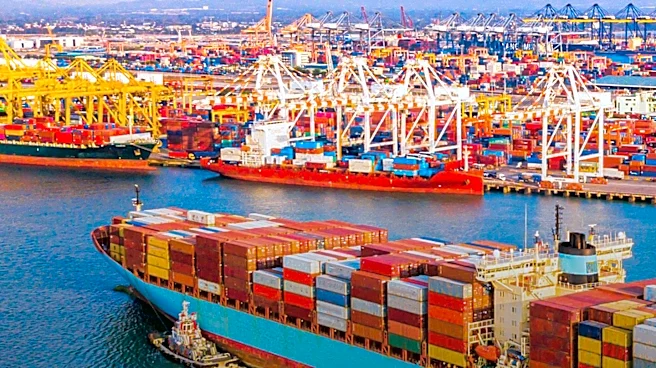
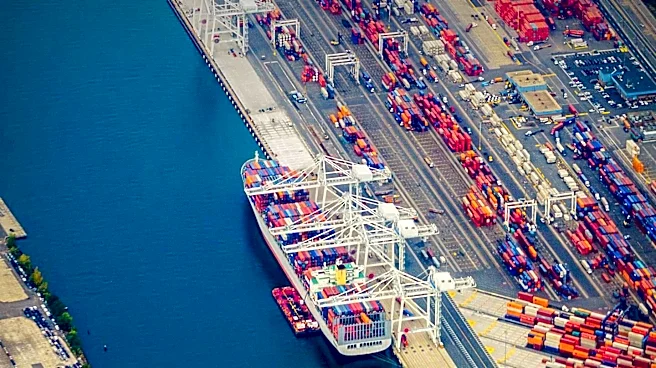
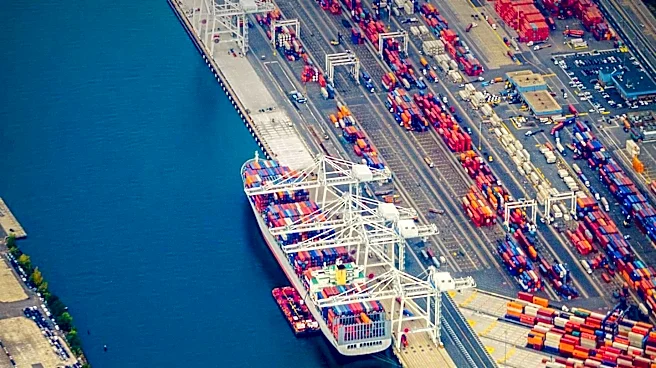
Retail Federation (NRF) and Hackett Associates, U.S. ports handled 2.37 million twenty-foot equivalent units (TEU) of loaded imports in September, marking a 3.4% increase from August and a 12.6% rise year-over-year. This made September the busiest month of 2026 and the third-busiest on record. NRF Vice President for Supply Chain and Customs Policy Jonathan Gold noted that sustained import volumes have caused backups at some ports, particularly on the West Coast, where cargo has experienced extended waits for rail transfer. The prolonged peak season is attributed to changes in U.S. tariffs, with retailers bringing forward shipments in anticipation of tariff increases, according to Hackett Associates founder Ben Hackett.
Why It's Important?
The extended import peak and subsequent congestion at U.S. ports have significant implications for the national economy and consumer markets. Persistent delays can lead to increased shipping costs, which are often passed on to consumers through higher retail prices, contributing to inflationary pressures. For retailers, supply chain disruptions can result in stockouts, missed sales opportunities, and reduced profitability, especially during critical shopping seasons. The unresolved labor negotiations at major ports like Los Angeles and Long Beach add another layer of uncertainty, as potential strikes could severely cripple cargo movement and further exacerbate congestion. This situation highlights the fragility of global supply chains and the need for robust infrastructure and efficient operational strategies to handle fluctuating import volumes. The tariff policies, identified as a key driver for the extended peak, demonstrate how government trade decisions directly impact logistics and port operations.
What's Next?
While import volumes are projected to decline from September's peak, they are expected to remain above year-earlier levels through December. The report forecasts year-on-year declines in the first three months of 2027, suggesting an easing of volumes. However, pressure on some points in the supply chain is expected to continue. The ongoing labor negotiations between the International Longshore and Warehouse Union Local 26 and the Pacific Maritime Association remain a critical factor. The short-term contract extensions have temporarily averted strikes, but a long-term settlement is still pending, creating potential for future disruptions. Retailers will continue to work closely with supply chain partners to manage inventory and ensure timely delivery of goods. Port authorities and logistics companies will likely focus on optimizing operations and addressing bottlenecks to improve efficiency as volumes normalize.
Beyond the Headlines
The recurring issues of port congestion and labor disputes reveal deeper structural challenges within the U.S. supply chain infrastructure. The reliance on just-in-time inventory systems, while efficient in stable times, proves vulnerable to disruptions caused by tariff changes, consumer demand surges, or labor unrest. This situation prompts a broader discussion about the need for long-term investments in port modernization, automation, and intermodal transportation networks to enhance resilience. Ethically, the labor negotiations highlight the ongoing tension between worker demands for fair wages and benefits, and the industry's need for operational stability and cost efficiency. The impact of tariff policies on supply chain behavior also underscores the complex interplay between trade policy, economic activity, and logistical realities, suggesting that policy decisions must consider their far-reaching operational consequences. Culturally, consumers may become more accustomed to potential product delays and price fluctuations, influencing purchasing habits and expectations.