

What's Happening?
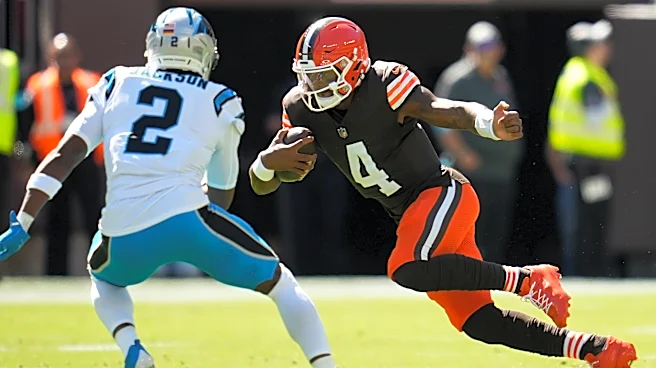
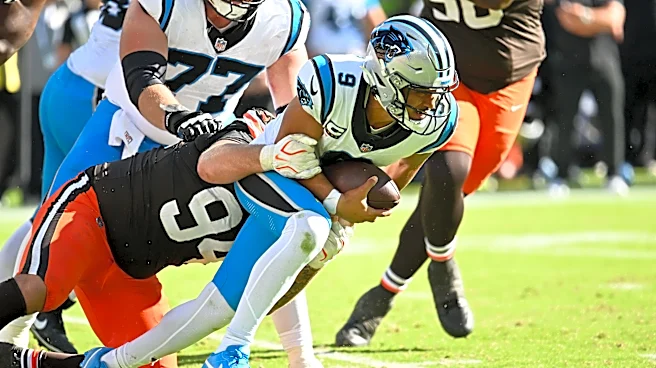
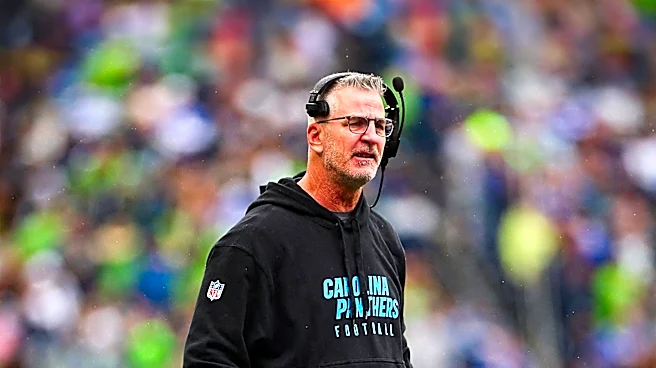
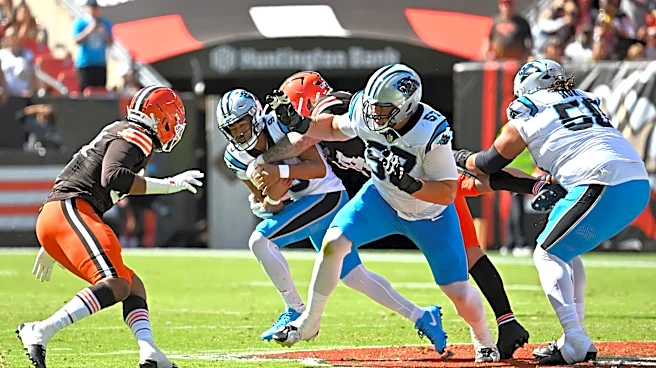
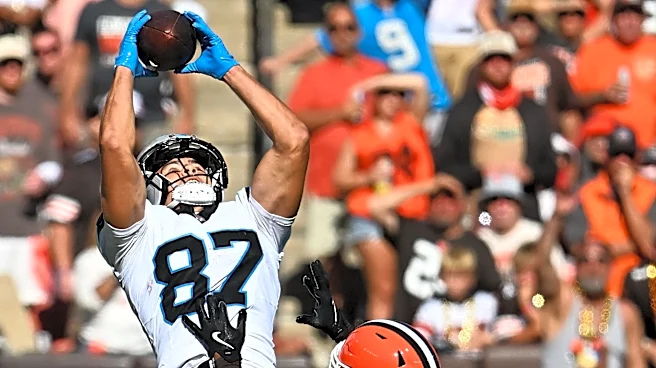
Carolina Panthers head coach Dave Canales is facing scrutiny over his fourth-down play-calling during the team's recent loss to the Cleveland Browns. The Panthers attempted two fourth-down conversions, one on fourth-and-one and another on fourth-and-inches,
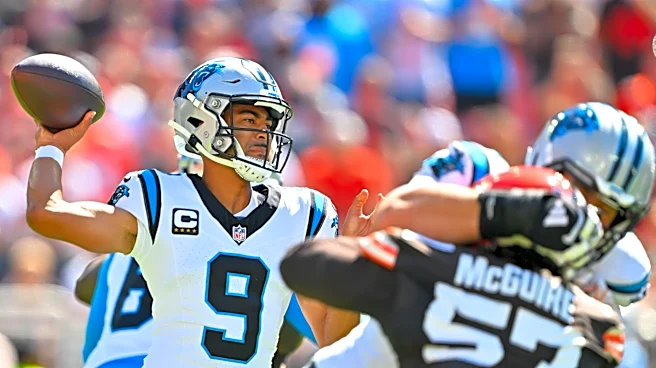
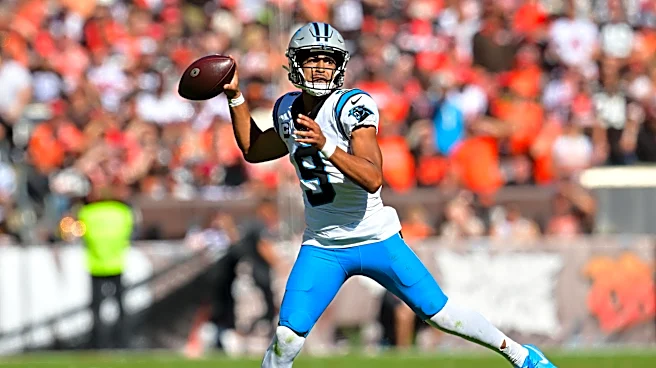
both within their own territory, and failed on both occasions. These failed conversions directly led to points for the Browns in a game the Panthers ultimately lost by three points. While some argue that going for it on fourth down, especially with short yardage, is generally a sound strategic decision, the criticism centers on the specific play designs and the team's inability to execute. The issue is compounded by the widely known fact that quarterback Bryce Young is not typically used for a quarterback sneak, making the Panthers' offense predictable in such situations. The team's offensive coordinator, Brad Idzik, is now responsible for play-calling, but the overall strategy and preparation fall under Canales' purview.
Why It's Important?
This situation highlights a critical aspect of modern NFL coaching: the balance between aggressive play-calling and effective execution. Canales' decisions, while strategically defensible in principle, exposed a significant weakness in the Panthers' offensive package. The predictability surrounding Bryce Young's inability to execute a quarterback sneak means opposing defenses can anticipate play calls, severely limiting the team's options in crucial short-yardage situations. This not only impacts game outcomes, as seen in the narrow loss to the Browns, but also affects team morale and fan confidence. For the Panthers, a team already facing early-season struggles and injuries to key players like cornerback Jaycee Horn and offensive lineman Damien Lewis, these coaching decisions and their consequences can derail their season. The inability to convert short fourth downs puts added pressure on an already challenged offense and could force Canales to re-evaluate fundamental aspects of his offensive scheme to ensure the team can compete effectively.
What's Next?
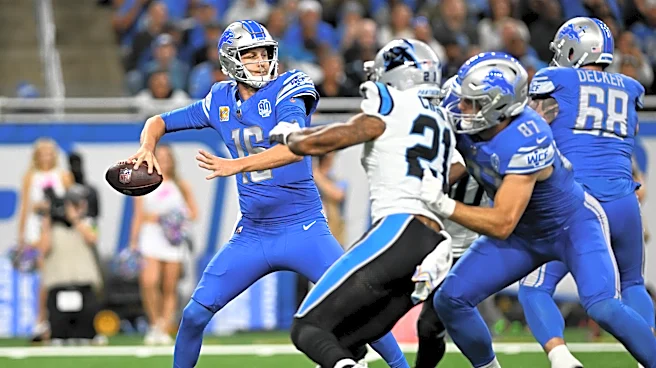
The immediate next step for Dave Canales and the Carolina Panthers will be to address the deficiencies in their short-yardage offensive package. This could involve developing new play designs that do not rely on Bryce Young for quarterback sneaks, or potentially utilizing other players like Kenny Pickett or Mitchell Evans in specific packages for these situations. The team is also dealing with significant injuries, including Jaycee Horn likely out for the season and Damien Lewis sidelined for several weeks, which will further challenge their ability to compete. The Panthers face a tough schedule ahead, including games against the Detroit Lions and Philadelphia Eagles, making it imperative for Canales to quickly adapt and implement solutions. The performance in upcoming games will be a crucial test of his ability to adjust his coaching strategy and improve the team's execution in critical moments.
Beyond the Headlines
The ongoing discussion around Dave Canales' fourth-down decisions extends beyond simple game strategy; it touches upon the broader philosophy of risk-taking in professional sports and the importance of adapting to player strengths and weaknesses. The criticism that the Panthers' offense is predictable in short-yardage situations due to Bryce Young's physical attributes raises questions about how coaching staffs develop schemes that maximize their roster's potential. It also underscores the ethical responsibility of a coach to put players in the best position to succeed, rather than adhering to a rigid strategic framework. The long-term implications for the Panthers could include a re-evaluation of their offensive personnel and play-calling philosophy, potentially influencing future draft picks and free-agent acquisitions to address these systemic weaknesses. This situation serves as a microcosm of the constant evolution required in professional sports to stay competitive and highlights the fine line between bold decision-making and strategic missteps.