


What's Happening?
The Los Angeles Dodgers, after failing to achieve a 'three-peat' and falling in the National League Championship Series to the Milwaukee Brewers, are entering the offseason with significant roster decisions. A major concern is the potential departure
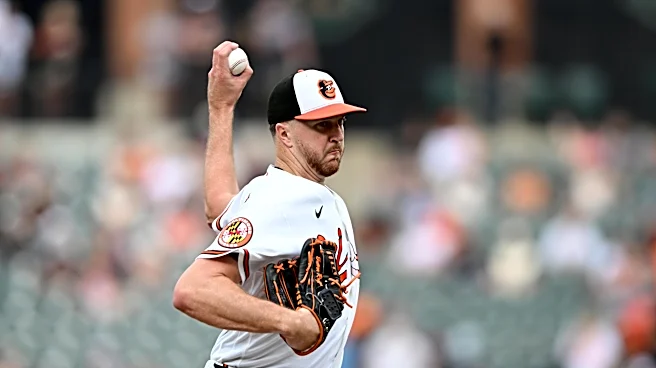
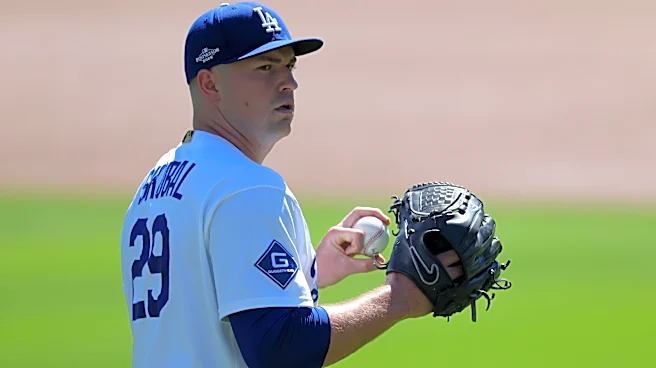
of ace pitcher Tarik Skubal, who is reportedly seeking a free-agency deal close to $400 million, a figure the Dodgers may be unwilling to meet. In anticipation of this, MLB analyst Tim Kelly of Bleacher Report has predicted that the Dodgers will pursue left-handed pitcher Trevor Rogers, currently with the Baltimore Orioles, as a replacement. Kelly projects a five-year, $100 million contract for Rogers, including a player opt-out after the 2028 season. Rogers had a strong 2026 season with the Orioles, posting a 4.03 ERA over 30 starts and 169.2 innings, with 157 strikeouts.
Why It's Important?
The potential acquisition of Trevor Rogers is crucial for the Dodgers as they aim to maintain their competitive edge and address a significant void in their pitching rotation if Tarik Skubal leaves. Skubal's departure would create a substantial gap, especially given the team's history of injuries within its pitching staff. While Rogers had a solid year, the Dodgers' front office, led by president of baseball operations Andrew Friedman, must weigh the cost and long-term fit. The projected contract for Rogers is substantial, and the team needs a pitcher capable of eating innings during the regular season, a role Rogers has only consistently filled once in his career. This move could dictate the Dodgers' pitching strategy for the upcoming seasons and their ability to contend for a World Series.
What's Next?
The Dodgers' front office will need to decide whether to meet Tarik Skubal's high contract demands or pivot to other options like Trevor Rogers. The Orioles are reportedly interested in retaining Rogers, which could lead to a bidding war. The Dodgers will assess Rogers' ability to handle a larger workload and provide the innings necessary for their rotation. They may also explore other, potentially more cost-effective, pitchers on the market who are more proven in terms of innings pitched. The outcome of these negotiations will significantly shape the Dodgers' pitching staff and their overall competitiveness for the next season.
Beyond the Headlines
This situation highlights a broader trend in MLB where elite pitching talent commands increasingly high salaries, forcing teams to make difficult financial and strategic decisions. The Dodgers, known for their willingness to spend, are now faced with balancing high-value contracts for established stars against the need for consistent, durable pitching. The emphasis on 'innings eaters' reflects the growing strain on pitching rotations due to increased velocity and strikeout rates, often leading to shorter outings and higher injury risks. The decision on Rogers will not only impact the Dodgers' immediate performance but also their long-term roster construction and financial flexibility in a highly competitive market.