





What's Happening?
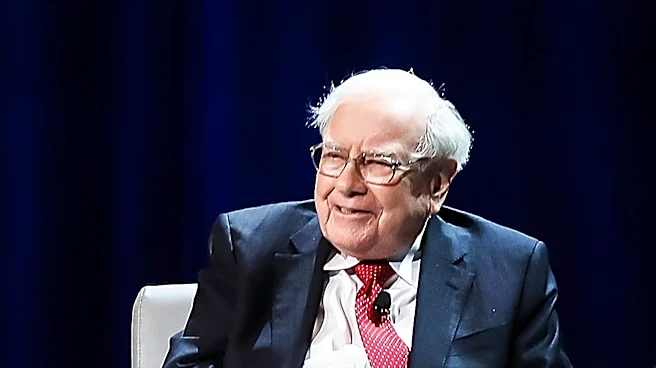
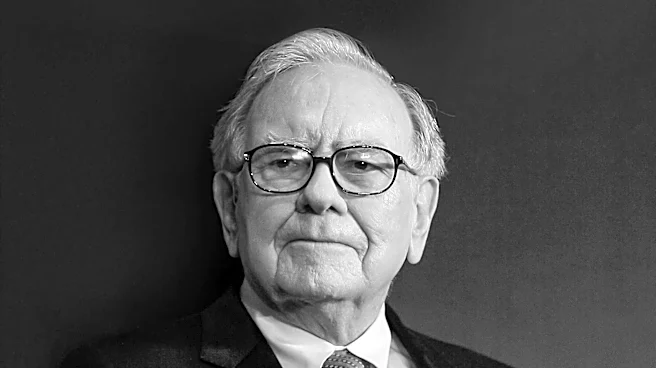
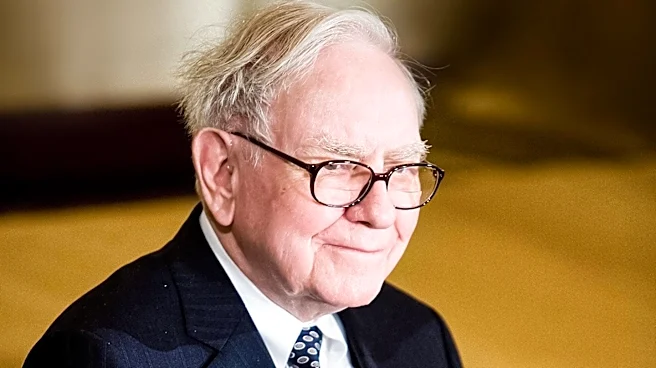
In 1957, Dr. Carol Angle, a 29-year-old pediatrician, invested half of her family's life savings, initially $10,000 and later increased to $30,000, with a then 27-year-old Warren Buffett after attending his investing class in Omaha. This initial investment,
made in Buffett's early partnership, has grown significantly over decades. By 1998, Forbes reported her family's Berkshire Hathaway holdings were valued at approximately $300 million. If the $30,000 investment from 1961 had remained in the partnership and subsequently in Berkshire Hathaway stock, it would be worth about $4.52 billion today. This contrasts sharply with an equivalent investment in the S&P 500, which would be around $23.7 million. Dr. Angle, who continued practicing medicine until 1999, never sold her shares despite significant market downturns, including four drops of 37% to 59% in Berkshire's stock value.
Why It's Important?
This story highlights the profound impact of long-term, disciplined investing, particularly in high-growth assets managed by exceptional investors like Warren Buffett. It underscores the power of compound interest and the potential for substantial wealth creation through patient, unwavering commitment to an investment strategy. For U.S. investors, it serves as a compelling case study against market timing and frequent trading, advocating instead for a 'buy and hold' approach. The Angles' decision to not sell during market volatility, even when facing significant paper losses, demonstrates a critical psychological aspect of successful investing. Their story also illustrates the generational wealth transfer potential, as shares held until death receive a stepped-up cost basis, effectively eliminating capital gains tax for heirs. This aspect has significant implications for estate planning and wealth management strategies for high-net-worth individuals in the U.S.
What's Next?
The Angle family's investment journey, while historical, continues to serve as a benchmark for long-term investment performance and strategy. For current investors, the narrative reinforces the importance of identifying and committing to sound investment principles, even amidst market fluctuations. The tax benefits associated with holding assets until death, such as the stepped-up cost basis, remain a key consideration for wealth transfer and estate planning in the U.S. This case study will likely continue to be cited in financial education and advisory circles, influencing how individuals and families approach their investment decisions and long-term financial planning. The story also implicitly encourages a focus on fundamental value and a deep understanding of one's investments, rather than reacting to short-term market noise.
Beyond the Headlines
Beyond the impressive financial figures, the Angle family's story touches upon deeper cultural and ethical dimensions of wealth. Dr. Carol Angle's continued dedication to her medical profession, even after accumulating significant wealth, and her modest lifestyle in Omaha, challenge conventional perceptions of affluence. Her quote, "There isn’t that much to spend money on in Omaha, and if you do, you’re highly suspect," reflects a value system that prioritizes purpose and community over ostentatious consumption. This perspective offers a counter-narrative to the often-glamorized aspects of extreme wealth, suggesting that true financial security can coexist with a grounded and service-oriented life. The story also subtly highlights the role of trust and personal connection in early investment decisions, as Dr. Angle's initial confidence in Buffett was based on his teaching and character, rather than just financial metrics.