









What's Happening?
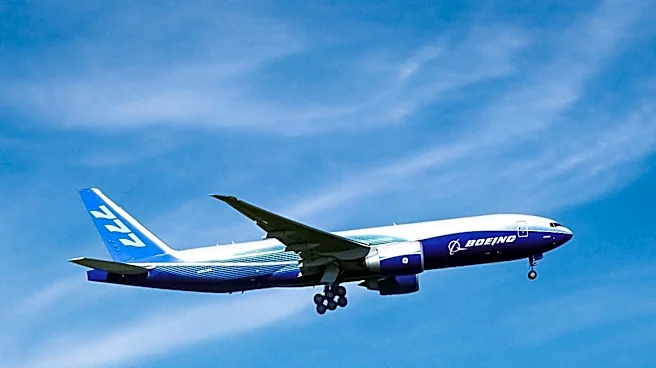
Mammoth Freighters, a Texas-based company, is set to open a Boeing 777 passenger-to-freighter conversion line in Qingdao, China. This initiative is in partnership with Taikoo (Shandong) Aircraft Engineering (STAECO), a joint venture involving HAECO, HAECO Xiamen,
Shandong Aviation Group, and Beijing Hua Kai Aviation Engineering Consulting Services. The new facility at Qingdao Jiaodong International Airport will be the company's first in the Asia-Pacific region, complementing its existing operations in the U.S. and Manchester, England. The first conversion line is scheduled to open in September, with the initial aircraft, a Boeing 777-200LR owned by Jetran, expected to enter conversion in the fall. A second conversion line is planned for early 2027. This expansion leverages Mammoth's innovative freighter solutions and STAECO's established conversion capabilities, alongside HAECO's engineering expertise.
Why It's Important?
The establishment of a conversion line in Qingdao marks a significant expansion for Mammoth Freighters into the Asia-Pacific market, a region with growing demand for cargo aircraft. This move is strategically important as it positions the company to better serve the increasing needs of the global logistics and freight industry, particularly in Asia, which is a major hub for international trade. The partnership with STAECO and the involvement of HAECO bring together substantial expertise and resources, enhancing the efficiency and capacity of freighter conversions. This development could lead to increased competition in the freighter conversion market, potentially driving innovation and cost efficiencies. Additionally, the project aligns with China's broader economic goals of enhancing its aviation capabilities and infrastructure.
What's Next?
The first conversion line is set to begin operations in September, with the first aircraft conversion expected in the fall. As the project progresses, stakeholders will likely monitor the efficiency and output of the new facility. The success of this venture could lead to further expansions or additional partnerships in the region. Industry observers will be keen to see how this development impacts the competitive landscape of the freighter conversion market, particularly in terms of pricing and technological advancements. The second conversion line, planned for early 2027, will further increase capacity and may attract additional business from airlines and logistics companies seeking to expand their cargo fleets.