



What's Happening?
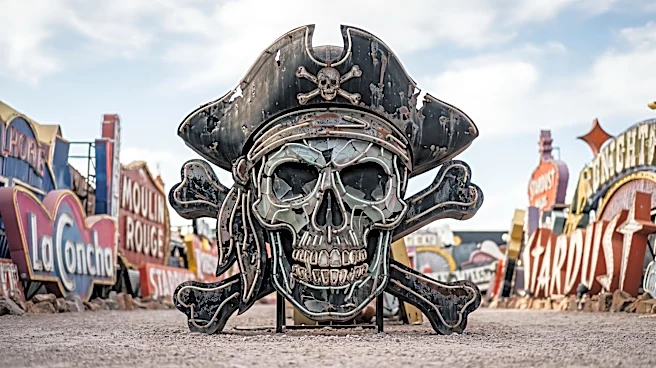
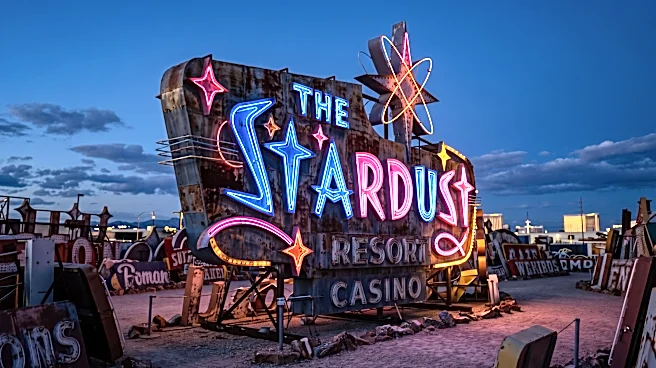
Aaron Berger, the executive director and CEO of The Neon Museum in Las Vegas, is spearheading extensive efforts to preserve the city's cultural and architectural history while expanding community engagement. Berger and his team actively collect artifacts
from sites slated for demolition, such as the Tropicana Las Vegas, from which they salvaged showgirl costumes, staff uniforms, and cocktail napkins before its 2024 collapse. The museum has also launched innovative outreach programs, including specialized field trips to the Neon Boneyard for senior citizens and K-12 students, and a 'Museum on Wheels' for grades 6-8. For high school students, a 40-foot bus has been converted into a neon-bending studio to teach chemistry, physics, graphic design, and manufacturing. Berger also initiated 'Vegas Voices' to record interviews with individuals who have shaped Las Vegas, including Tim Burton and Katy Perry.
Why It's Important?
Berger's work at The Neon Museum is crucial for safeguarding the unique and rapidly changing history of Las Vegas, a city known for its constant reinvention and demolition. By preserving iconic neon signs and other artifacts, the museum ensures that the visual and cultural legacy of 'Sin City' is not lost, offering future generations insights into its evolution. The educational outreach programs are vital for connecting diverse community segments, from students to senior citizens, with their local history and the artistic heritage of neon. These initiatives not only foster a deeper appreciation for Las Vegas's past but also inspire interest in STEM fields through hands-on learning, like neon bending. The 'Vegas Voices' project captures invaluable oral histories, providing firsthand accounts that enrich the understanding of the city's development and its impact on American culture.
What's Next?
Berger continues to develop new programs and opportunities to engage the public with Las Vegas's cultural contributions. His 'Duck Duck Shed' architectural, cultural, and entertainment experience, launched in 2022, attracts thousands globally and explores various facets of the city, from casino psychology to hidden histories. The ongoing expansion of educational programs and the 'Vegas Voices' archive suggest a sustained commitment to making the museum a dynamic hub for learning and preservation. Future initiatives are likely to further integrate the city's unique narrative into the museum's offerings, ensuring its relevance and accessibility to a broad audience. The museum's proactive approach to collecting artifacts from demolition sites indicates a continuous effort to capture history as it unfolds.
Beyond the Headlines
The work of Aaron Berger and The Neon Museum highlights a broader challenge faced by many rapidly developing American cities: how to balance progress and modernization with the preservation of cultural heritage. Las Vegas, with its transient architecture and constant reinvention, serves as a microcosm of this dilemma. The museum's focus on neon signs, often seen as ephemeral commercial art, elevates them to significant cultural artifacts, challenging traditional notions of what constitutes historical preservation. This effort also underscores the importance of community engagement in cultural institutions, transforming museums from static repositories into active participants in civic life. By involving students, seniors, and diverse community members, The Neon Museum is not just preserving the past but actively shaping a more informed and engaged future for Las Vegas.