








What's Happening?
Global stock markets have experienced significant gains, marking the largest quarterly increase in six years. This surge is attributed to a combination of factors, including a fragile ceasefire between the U.S. and Iran, which has led to a substantial
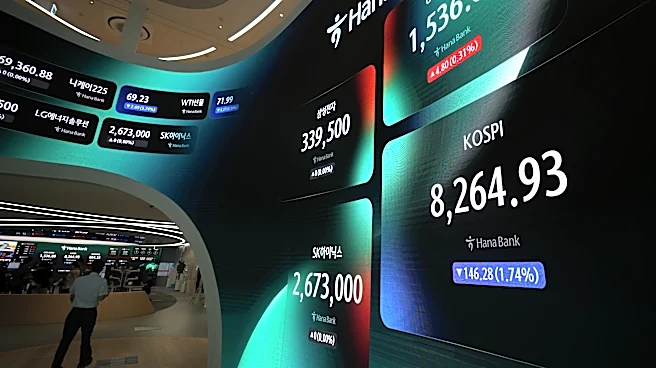
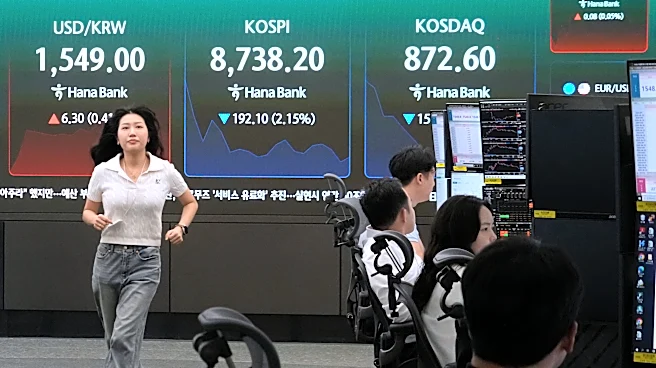
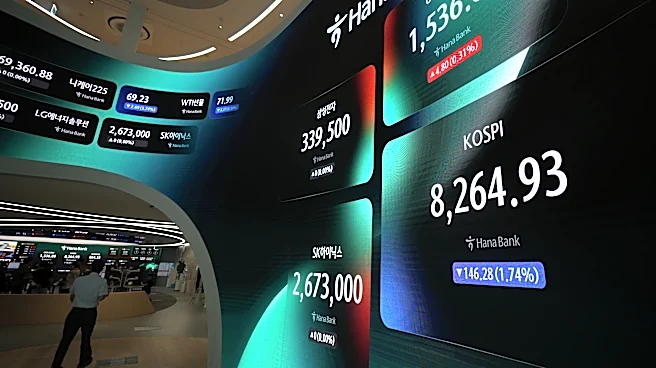
drop in oil prices. Brent oil has seen its largest quarterly decline since 2020, falling nearly 40% over the past three months. The U.S. dollar has also strengthened, posting its fourth consecutive quarterly rise against a basket of currencies. Meanwhile, the boom in artificial intelligence stocks has contributed to the equities rally, with significant gains in South Korea's KOSPI and Taiwan's benchmark index.
Why It's Important?
The current market dynamics highlight the complex interplay between geopolitical events and financial markets. The decline in oil prices, while beneficial for consumers and industries reliant on energy, poses challenges for oil-producing countries and companies. The strengthening of the U.S. dollar reflects investor confidence in the U.S. economy, but it also impacts global trade dynamics, particularly for emerging markets. The rise in AI stocks underscores the growing influence of technology on market trends, potentially reshaping investment strategies and economic priorities. These developments could have long-term implications for global economic stability and growth.
What's Next?
As the ceasefire between the U.S. and Iran remains fragile, any escalation in tensions could lead to renewed volatility in oil prices and financial markets. Investors will be closely monitoring geopolitical developments and central bank policies, particularly regarding interest rate decisions. The ongoing strength of the U.S. dollar may prompt responses from other countries to protect their economic interests. Additionally, the continued rise of AI stocks suggests a potential shift in market focus towards technology-driven sectors, which could influence future investment patterns and economic policies.
Beyond the Headlines
The current situation highlights the potential for geopolitical events to disrupt global markets and the importance of strategic economic planning. The decline in oil prices may accelerate the transition to renewable energy sources, as countries seek to reduce their dependence on fossil fuels. The rise of AI stocks reflects broader technological advancements that could transform industries and labor markets. These trends underscore the need for adaptive economic policies and investment strategies to navigate the evolving global landscape.