






What's Happening?
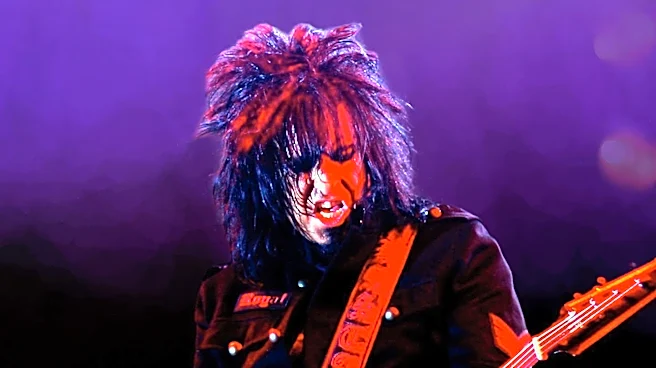
Motley Crue's 1994 album, released during Vince Neil's absence and featuring John Corabi on vocals, is specifically noted as a 'Grunge-era album'. This album stands out in the band's discography, which otherwise largely defines the 1980s Sunset Strip
glam-metal movement. Motley Crue, formed in Los Angeles in 1981, built its reputation on Vince Neil's high, raspy vocals, Nikki Sixx's bass playing and songwriting, Tommy Lee's drumming, and Mick Mars's bluesy guitar riffs, fusing heavy metal with glam theatricality. Their commercial peak included multi-platinum releases like 'Girls, Girls, Girls' and 'Dr. Feelgood', with the latter reaching No. 1 on the Billboard 200. The band has sold over 100 million records worldwide and continues to tour, with John 5 joining as touring guitarist in 2022 after Mick Mars's retirement.
Why It's Important?
The designation of Motley Crue's 1994 album as a 'Grunge-era' release is important because it highlights a significant stylistic shift for a band synonymous with glam metal. This period reflects the broader music industry's response to the rise of grunge in the early 1990s, which challenged the dominance of hair metal. For Motley Crue, this album represents an attempt to adapt to changing musical tastes, even if it diverged from their signature sound. It underscores the pressure on established bands to remain relevant during major genre shifts. This particular album, while not featuring their classic lineup's lead vocalist, provides a unique insight into the band's willingness to experiment and the impact of external musical trends on their creative direction, offering a different facet to their otherwise consistent glam metal identity.
Beyond the Headlines
The 'Grunge-era' label for Motley Crue's 1994 album reveals more than just a temporary change in vocalists; it speaks to a pivotal moment in rock music history where the grunge movement fundamentally altered the landscape. The shift from glam metal's theatricality and polished sound to grunge's raw, introspective, and often heavier aesthetic forced many bands to re-evaluate their artistic direction. Motley Crue's album with John Corabi can be seen as a microcosm of this larger industry-wide struggle for relevance. It illustrates how cultural shifts in music can influence even the most iconic bands, prompting them to explore new sounds and themes. This period also highlights the transient nature of musical trends and the continuous evolution of artistic expression within popular culture.