








What's Happening?
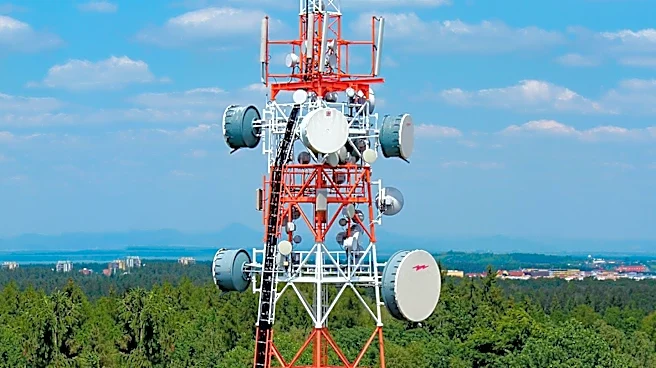
Most phone service providers in the U.S. do not own the cell towers that form the backbone of their networks. Instead, they lease space on these towers from a few major landlords or independent tower companies. As of 2025, the Wireless Infrastructure
Association (WIA) reported approximately 158,500 purpose-built towers in the U.S. The primary owners of these towers include American Tower, with 42,224 sites in the U.S. and Canada; Crown Castle, possessing around 40,000 towers; and SBA Communications, which owns 17,394 sites in the U.S. Even large carriers like T-Mobile, which reported using 51,000 cell sites in 2012, lease the majority of these structures. This model allows carriers to expand their coverage without incurring the full cost and responsibility of owning and maintaining the physical infrastructure.
Why It's Important?
This ownership structure has significant implications for the U.S. telecommunications industry. It allows mobile virtual network operators (MVNOs) to offer services by renting network space from the major carriers, who in turn rent towers from these specialized landlords. This tiered system facilitates broader network coverage and competition among service providers by reducing the capital expenditure required for infrastructure. The concentration of tower ownership among a few companies creates a critical dependency for all wireless carriers, influencing operational costs and the speed of network expansion. This model also impacts the deployment of new technologies like 5G, which often requires a higher density of smaller wireless facilities mounted on urban infrastructure, as traditional towers alone cannot meet the demand for shorter wavelengths and higher speeds.
What's Next?
The trend of carriers leasing rather than owning towers is expected to continue, especially with the ongoing rollout of 5G technology. This will likely increase the demand for small cell deployments and other distributed antenna systems (DAS) that can be integrated into existing urban infrastructure. Tower companies will continue to play a crucial role in facilitating network expansion and technological upgrades. Future developments may involve more complex leasing agreements and partnerships as carriers seek to optimize their network performance and coverage. The regulatory environment will also need to adapt to these evolving infrastructure models, particularly concerning spectrum allocation and the deployment of new wireless technologies.
Beyond the Headlines
The reliance on third-party tower ownership highlights a broader economic principle of specialization and asset-light strategies within capital-intensive industries. By outsourcing infrastructure ownership, wireless carriers can focus on their core competencies of service provision and customer acquisition. However, this also centralizes control over critical infrastructure, raising questions about potential bottlenecks, pricing power, and the resilience of the network in times of crisis. The long-term implications include the potential for these tower companies to become even more influential players in the digital economy, shaping the landscape of connectivity and access for millions of Americans. This model also underscores the importance of robust regulatory oversight to ensure fair access and prevent anti-competitive practices in the essential infrastructure market.