




What's Happening?
The term 'clean' in the beauty industry, particularly for fragrances, lacks a universal regulatory definition, leading to varied interpretations by brands. In the United States, fragrance formulas can be listed simply as 'fragrance' or 'parfum' on labels,
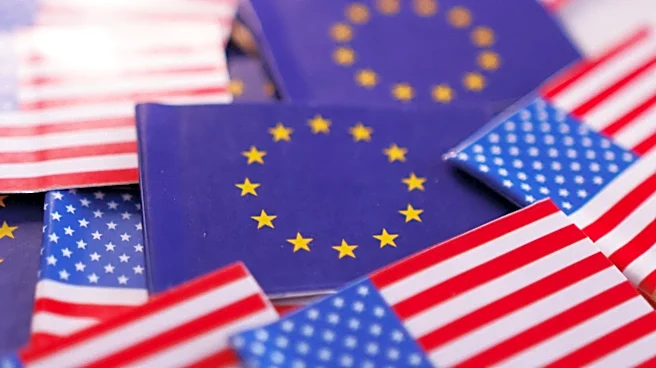
allowing companies to conceal dozens of undisclosed chemicals. This absence of a standardized definition means that while some brands might use 'clean' to indicate the absence of a few controversial chemicals like parabens, others might extend it to mean vegan, cruelty-free, and free from hundreds of flagged ingredients. Consumers are therefore tasked with the responsibility of scrutinizing ingredient lists, exclusion lists, and third-party certifications to determine a product's true 'clean' status. The European Union, in contrast, has stricter regulations, banning or restricting over a thousand fragrance ingredients still permitted in the U.S., which further complicates the landscape for consumers seeking genuinely clean products.
Why It's Important?
The unregulated nature of 'clean beauty' in the U.S. has significant implications for consumer safety and market transparency. Without a clear, legally binding definition, consumers are vulnerable to 'greenwashing,' where brands use vague or misleading claims to market products as healthier or more environmentally friendly than they are. This lack of standardization can lead to confusion, making it difficult for individuals, especially those with allergies or sensitivities, to make informed purchasing decisions. For U.S. businesses, this creates an uneven playing field; while some brands genuinely commit to rigorous clean standards, others may exploit the ambiguity for marketing advantage without substantial reformulation. The disparity between U.S. and EU regulations also means that products considered 'clean' in the U.S. might not meet European standards, potentially limiting market access for U.S. brands and highlighting a gap in domestic consumer protection.
What's Next?
Given the growing consumer demand for transparency and safer ingredients, there is a potential for increased pressure on U.S. regulatory bodies, such as the FDA, to establish clearer guidelines or a standardized definition for 'clean beauty.' This could involve expanding mandatory ingredient disclosure requirements beyond the current 'fragrance' loophole and aligning more closely with stricter international standards, like those in the EU. In the interim, consumers will continue to rely on independent third-party certifications, detailed exclusion lists, and full ingredient transparency from brands to verify 'clean' claims. Brands that proactively adopt and clearly communicate comprehensive clean standards, including independent testing and ethical sourcing, are likely to gain consumer trust and market share. The industry may also see the emergence of more robust self-regulatory initiatives or industry-wide consortia aimed at defining and enforcing 'clean' criteria to build collective credibility.
Beyond the Headlines
The 'clean beauty' movement is more than a trend; it reflects a fundamental shift in consumer values towards health, wellness, and environmental consciousness. The ambiguity surrounding the term highlights a broader challenge in consumer markets where marketing language often outpaces regulatory oversight. This situation underscores the power of informed consumerism, as individuals increasingly demand accountability and transparency from brands. It also points to the evolving role of scientific research and independent verification in validating product claims, moving beyond brand-centric narratives. The push for 'clean' products can also be seen as a response to growing concerns about the long-term health impacts of chemical exposure and the environmental footprint of the beauty industry. This cultural shift is likely to drive innovation in sustainable packaging, ethical supply chains, and the development of truly non-toxic formulations, ultimately reshaping the entire beauty ecosystem.