




What's Happening?
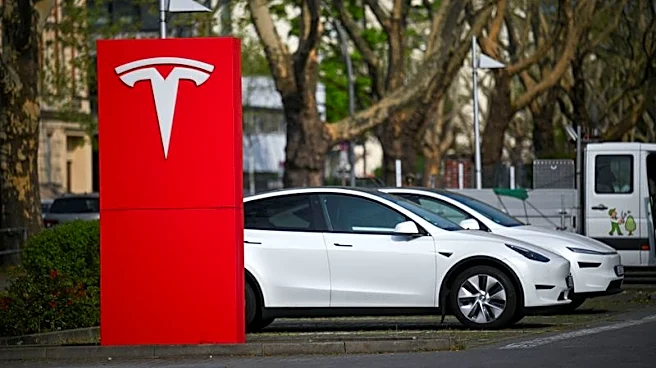
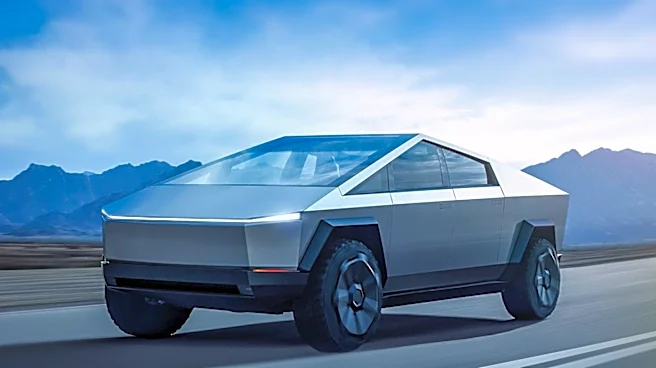
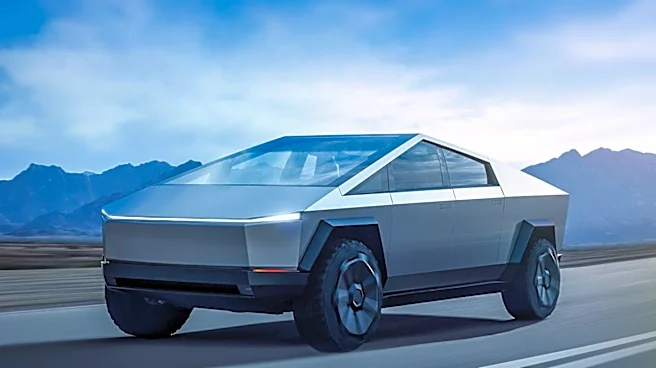
Tesla announced plans to invest €3 billion ($3.3 billion) in its German factory near Berlin to commence production of Cybercabs, its driverless taxis. This expansion comes after CEO Elon Musk's recent announcement to cease Cybertruck production. Construction
for the Cybercab production is slated to begin in 2027, with the first vehicles expected off the production line by 2029. The company aims to reach a production capacity of 1 million units, though the timeframe for this goal remains unspecified. Employment at the Grünheide 'gigafactory' had previously dipped to 11,000 but rose to 12,600 in October, and the new expansion is projected to create several hundred additional jobs. Brandenburg's State Premier Dietmar Woidke welcomed the investment, highlighting Germany's continued attractiveness for major industrial investments.
Why It's Important?
This significant investment by Tesla in its German factory underscores the company's strategic shift towards autonomous ride-sharing services with the Cybercab, moving away from the Cybertruck. For the U.S. automotive industry, this decision reflects a broader trend of globalized manufacturing and the increasing importance of international markets for electric vehicle (EV) companies. While the production is in Germany, the success of Cybercabs could influence Tesla's global strategy and potentially accelerate the adoption of autonomous vehicle technology in the U.S. The investment also signals Tesla's confidence in the European market and its commitment to expanding its manufacturing footprint outside the U.S. The creation of hundreds of jobs in Germany, coupled with the ambitious production targets, indicates a robust growth trajectory for Tesla's EV and autonomous vehicle segments, which could have ripple effects on supply chains and technological advancements relevant to the U.S. market.
What's Next?
Tesla plans to submit an application for the new building by the end of the year, with construction expected to start in 2027 and Cybercab production commencing in 2029. The company also aims to increase weekly vehicle production at the Grünheide factory to 7,500 units, equivalent to 375,000 annually, and expand its battery cell production on-site. The success of the Cybercab initiative will depend on regulatory approvals for autonomous vehicles, market acceptance, and the company's ability to scale production efficiently. The shift from Cybertruck to Cybercab production indicates a strategic pivot that will be closely watched by competitors and investors in the EV and autonomous driving sectors globally, including in the U.S.
Beyond the Headlines
Tesla's pivot from the Cybertruck to the Cybercab highlights the evolving priorities within the automotive industry, with a growing emphasis on autonomous mobility solutions and ride-sharing services. This strategic move could accelerate the development and deployment of self-driving technology, potentially transforming urban transportation landscapes. The decision to focus on Cybercabs in Germany also reflects the complex interplay of global manufacturing strategies, local economic incentives, and market demand. The environmental implications of large-scale EV production, including water usage and energy consumption, remain a critical consideration, as evidenced by past tensions with local residents near the Grünheide factory. The success of Cybercabs could also intensify the debate around the ethical and societal impacts of autonomous vehicles, including job displacement for human drivers and the regulatory frameworks required for their safe operation.