







What's Happening?
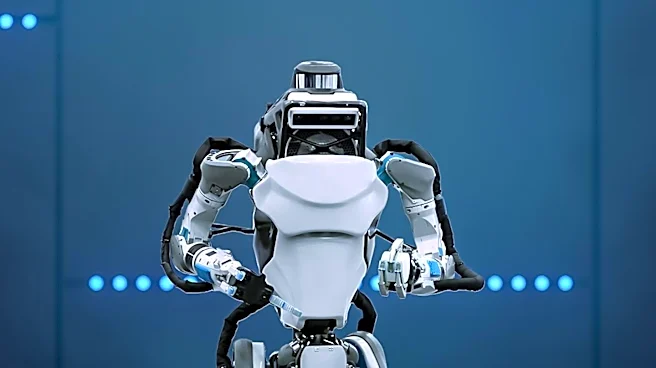
Remi Cadene, a former scientist at Tesla, has launched a new startup in Paris named UMA, which focuses on developing humanoid robots. The startup unveiled its Northstar humanoid design and Real-Time Learning architecture at the Machina Summit on July
7, 2026. The robots are designed to operate in human-centric environments such as factories, warehouses, hospitals, and care settings, adhering to European safety standards. Unlike traditional industrial robots, these humanoids are intended for manipulation in human spaces, emphasizing demonstration-based skill learning. This approach aims to enhance the robots' ability to perform tasks in dynamic environments, moving beyond fixed industrial applications.
Why It's Important?
The launch of UMA's humanoid robots represents a significant shift in robotics, focusing on adaptability and human interaction. This development could revolutionize industries by providing more flexible and efficient automation solutions. The emphasis on human-centric workflows and safety standards aligns with the growing demand for robots that can seamlessly integrate into existing human environments. This could lead to increased productivity and safety in sectors like healthcare and logistics, where human-robot collaboration is crucial. The startup's approach may also influence other robotics companies to prioritize adaptability and real-time learning in their designs.
What's Next?
UMA's focus on demonstration-based skill learning suggests that the company will continue to refine its technology to improve the robots' adaptability and efficiency. As the startup gains traction, it may attract partnerships with industries looking to enhance their automation capabilities. The success of UMA's humanoid robots could prompt regulatory bodies to update safety standards and guidelines for human-robot interaction. Additionally, the company's progress may inspire further innovation in the robotics field, encouraging other startups to explore similar human-centric approaches.
Beyond the Headlines
The introduction of humanoid robots into human-centric environments raises ethical and cultural questions about the future of work and the role of robots in society. As these robots become more integrated into daily operations, there may be concerns about job displacement and the need for new skill sets among workers. The emphasis on safety and adaptability highlights the importance of developing robots that can coexist with humans without compromising safety or efficiency. This development could also lead to broader discussions about the ethical implications of advanced robotics in various sectors.