




What's Happening?
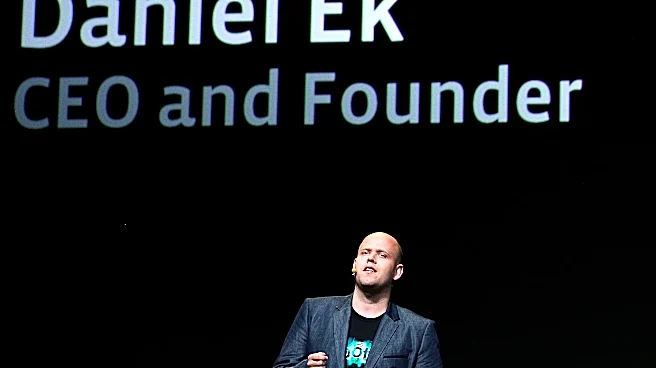
Daniel Ek, the founder of Spotify, is backing Europa Fusion, a UK-based fusion power startup. Europa Fusion was founded in February by AI researcher Nantas Nardelli, who previously worked at Google DeepMind, Facebook AI Research, and Microsoft Research Cambridge.
The startup aims to develop fusion power using a pulsed-power approach, which involves compressing fuel targets with precisely timed surges of electrical current until atoms fuse and release energy. A key differentiator for Europa Fusion is its emphasis on simulations and data analysis over extensive physical test devices, a strategy Nardelli favors based on his background in artificial intelligence. While the company was founded in February, Nardelli had been developing the concept for a longer period. The specific amount of Ek's investment, the funding round details, and the company's valuation have not been publicly disclosed, as Europa Fusion operates with a degree of discretion.
Why It's Important?
This investment highlights a growing trend of significant capital flowing into the fusion energy sector, driven by the promise of a carbon-free power source. The involvement of a prominent tech figure like Daniel Ek, known for his success with Spotify, lends credibility and visibility to the nascent fusion industry. Europa Fusion's approach, prioritizing simulations and data, could potentially accelerate development by reducing the need for costly and time-consuming physical experiments, a common bottleneck in fusion research. If successful, fusion energy could offer a nearly limitless and clean power supply, addressing global energy demands and climate change concerns. The increasing electricity consumption by artificial intelligence data centers further underscores the urgency and importance of developing sustainable energy solutions, making fusion an attractive long-term prospect for investors and innovators alike.
What's Next?
Europa Fusion will need to demonstrate the efficacy of its simulation- and data-heavy approach in advancing fusion technology. While the company has not announced a timeline for building a power plant or specific technical parameters, its progress will be closely watched by the energy sector and investors. The broader fusion industry continues to face the challenge of achieving net energy gain and commercial viability, with no fusion plant yet supplying electricity to the grid. Europa Fusion's strategy represents a different pathway to potentially overcome these hurdles. Future developments will likely include further funding rounds, the publication of research findings, and potentially the announcement of physical testing facilities if their simulation-first approach proves successful in guiding hardware development.
Beyond the Headlines
The investment in Europa Fusion by Daniel Ek underscores a broader shift in how complex scientific and engineering challenges are being tackled, leveraging advancements in artificial intelligence and data science. Nardelli's background in AI research suggests a belief that sophisticated computational models can significantly de-risk and accelerate the development of fusion power, traditionally a hardware-intensive field. This approach could set a precedent for other deep-tech ventures, emphasizing intellectual capital and computational power over brute-force experimentation. Furthermore, the intersection of fusion energy and AI's energy demands highlights a critical feedback loop: AI requires vast amounts of energy, and fusion could provide a sustainable solution, potentially creating a symbiotic relationship that drives both fields forward. The ethical and societal implications of abundant, clean energy are profound, potentially reshaping global geopolitics, economic structures, and environmental policies in the long term.