





What's Happening?
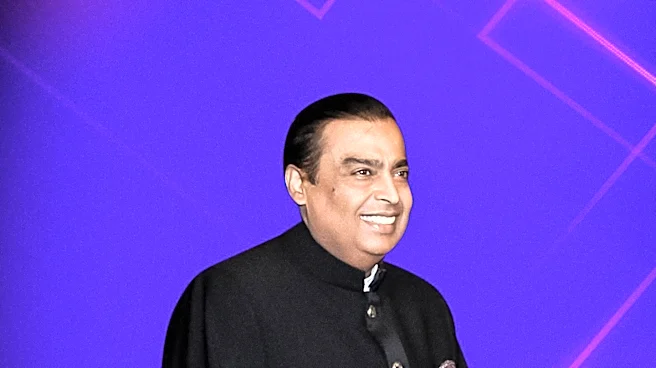
Mukesh Ambani, chairman and managing director of Reliance Industries, has become Asia's richest person, surpassing ByteDance founder Zhang Yiming. According to Forbes' Real-Time Billionaires List, Ambani's net worth increased to US$90.6 billion, placing
him 22nd globally. His business empire, Reliance Industries, has diverse interests spanning petrochemicals, oil and gas, telecommunications, retail, media, and financial services. Zhang Yiming's fortune stands at approximately US$84 billion, making him the 25th richest person worldwide and still China's wealthiest individual. Other notable billionaires in China include Nongfu Spring founder Zhong Shanshan, with a net worth of US$65.1 billion, and Hong Kong's richest person, Li Ka-shing, at US$49.2 billion. Tencent's Pony Ma Huateng is ranked 40th globally with US$46.3 billion.
Why It's Important?
This shift in wealth leadership in Asia highlights the dynamic economic landscape and the growing influence of diversified conglomerates like Reliance Industries. Mukesh Ambani's ascent reflects the robust performance and strategic expansion of his company across multiple high-growth sectors, including the digital and retail markets in India. This development could signal a broader trend of wealth accumulation in traditional industries that successfully pivot into new technological and consumer-facing ventures. For the U.S., this change in Asian wealth leadership could influence investment flows and strategic partnerships, as American companies often seek collaborations with leading Asian conglomerates. The continued prominence of Chinese tech billionaires like Zhang Yiming and Pony Ma also underscores the ongoing technological competition and innovation in the region, which has global implications for market dominance and technological advancement.
What's Next?
The ranking of Asia's richest individuals is subject to continuous fluctuations based on market performance, company valuations, and strategic business decisions. Mukesh Ambani's position will likely be influenced by the future growth trajectories of Reliance Industries' various segments, particularly its digital and retail arms. Similarly, the fortunes of Zhang Yiming and Pony Ma will depend on the performance and expansion of their respective technology giants, ByteDance and Tencent, in an increasingly competitive global market. Investors and market observers will closely monitor these billionaires' business strategies and market movements, as their wealth often reflects broader economic trends and investment opportunities in Asia. The ongoing competition for market share and innovation in sectors like AI, e-commerce, and telecommunications will continue to shape the wealth landscape in the region.
Beyond the Headlines
The concentration of immense wealth in the hands of a few individuals in Asia, particularly in India and China, raises broader questions about economic inequality and the distribution of economic growth. While these billionaires drive significant innovation and create numerous jobs, their vast fortunes also highlight disparities in income and opportunity. The sectors in which these individuals have built their wealth—technology, diversified industries, and consumer goods—are indicative of the key drivers of economic growth in the 21st century. This trend also underscores the increasing interconnectedness of global economies, where the success of a few individuals in one region can have ripple effects on international markets and investment strategies. The philanthropic activities and investment decisions of these ultra-wealthy individuals can also significantly impact social and economic development in their respective countries and beyond.