




What's Happening?
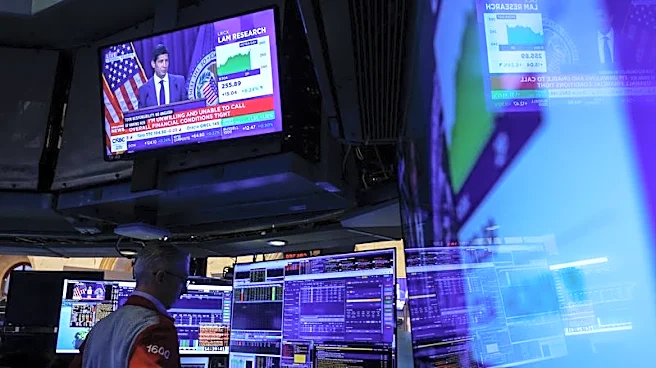
Concerns over the sustainability and return on investment of massive artificial intelligence (AI) spending have triggered a significant selloff in global equities, particularly impacting technology stocks. On Friday, October 30, the Nasdaq Composite fell
2.9%, the S&P 500 declined 1.8%, and the Dow Jones Industrial Average dropped 1.1%. This market reaction reflects a broader reassessment of the AI investment cycle, including the substantial costs associated with data centers, advanced chips, electricity, research, and financing. Major U.S. tech companies like Microsoft, Amazon, and Alphabet reported quarterly results that signaled continued heavy investment in AI infrastructure, even as investors grew impatient for tangible returns. Intel's shares also fell sharply after a disappointing earnings update, contributing to the downward pressure across chipmakers and technology suppliers.
Why It's Important?
This market downturn highlights a critical challenge for the U.S. technology sector and the broader economy: the need for AI investments to translate into measurable revenue and profit growth. The current spending levels, with major tech companies committing hundreds of billions of dollars, are placing immediate pressure on cash flow, capital expenditure, and balance sheets. If the payoff from these investments arrives later than expected, or if AI-related spending outpaces revenue growth, valuation multiples for high-growth technology stocks could contract significantly. This situation affects not only the tech giants but also the entire AI ecosystem, including semiconductor manufacturers, cloud providers, software firms, and data-center operators, as weakness in one area can quickly propagate. The selloff also underscores the sensitivity of technology valuations to rising interest rates, which make future profits less valuable in present-day terms.
What's Next?
The market's focus will shift from AI enthusiasm to evidence-based returns. Future earnings reports, capital-spending plans, financing conditions, and guidance from major technology companies will be crucial in determining the next phase for global equities and tech futures. Investors will demand clearer demonstrations of how AI spending is generating revenue, improving margins, or defending market positions. This environment will likely favor companies that can show measurable productivity gains, durable customer demand, and disciplined investment strategies. Conversely, companies that expand spending without transparently explaining their return on investment could face continued market pressure. For traders, this period emphasizes the importance of risk management, monitoring key market signals, and evaluating company quality based on financial fundamentals rather than just compelling narratives.
Beyond the Headlines
The current market pressure on AI spending reveals a deeper tension within the technology industry: the balance between long-term transformative potential and short-term financial accountability. While AI is widely recognized as a pivotal technology, the sheer scale of investment without immediate, clear returns is challenging traditional valuation models. This could lead to a more conservative investment climate for emerging technologies, where capital is allocated more selectively. It also raises questions about the potential for market consolidation, as only companies with robust balance sheets and diverse revenue streams may be able to sustain such massive, long-term investments. The debate over AI's financial viability could also influence regulatory discussions, particularly regarding market concentration and the allocation of resources within the tech sector.