


What's Happening?
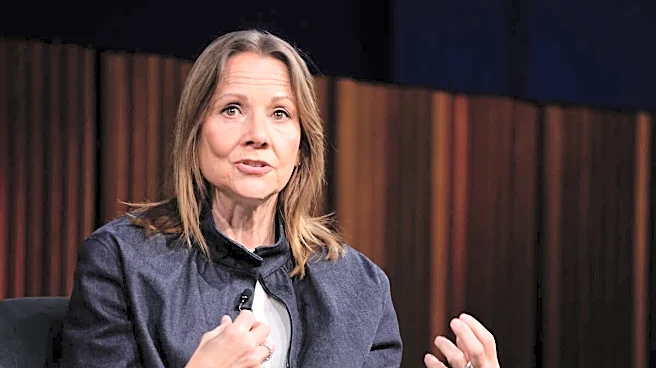
General Motors (GM) CEO Mary Barra has confirmed that the company is on track to launch its 'eyes-off, hands-off' driving system by 2028. This announcement was made during an interview with Jim Cramer on CNBC’s Mad Money. The advanced driver-assistance
system is slated to debut on the electric Cadillac Escalade IQ in 2028, with plans for subsequent expansion to other GM models. This new system builds upon GM's existing Super Cruise technology, which allows for hands-off driving but still requires driver attentiveness. The upcoming 'eyes-off' system will permit drivers to divert their gaze from the road under specific conditions. Barra recently experienced the technology firsthand and expressed satisfaction with its progress since a previous test in March. She emphasized GM's strong position in personal autonomy, suggesting that as the technology evolves, drivers will have more flexibility in choosing when to actively drive.
Why It's Important?
This development signifies a major step forward in the automotive industry's pursuit of autonomous driving and has significant implications for the U.S. market. GM's commitment to launching 'eyes-off' driving by 2028 positions it as a leader in advanced driver-assistance systems, potentially giving it a competitive edge. The technology could enhance road safety by reducing human error and improve the driving experience by offering greater convenience. For consumers, this means the prospect of more relaxed and less demanding long-distance travel. The focus on personal vehicles, following GM's exit from the robotaxi business, indicates a strategic shift towards integrating advanced autonomy directly into consumer-owned cars. This could also influence urban planning and infrastructure development, as cities may need to adapt to a future with increasingly autonomous vehicles. Furthermore, the success of this technology could spur further investment and innovation in the autonomous vehicle sector across the U.S., creating new jobs and economic opportunities.
What's Next?
Following CEO Mary Barra's confirmation, the next steps for General Motors will involve continued rigorous testing and refinement of the 'eyes-off, hands-off' driving system to ensure its safety and reliability for public use. The initial rollout on the electric Cadillac Escalade IQ in 2028 will be a critical benchmark, providing real-world data and consumer feedback. GM will likely focus on expanding the technology to a broader range of its vehicle lineup, potentially influencing purchasing decisions for consumers seeking advanced autonomous features. The company will also need to navigate regulatory landscapes, as government bodies will play a crucial role in establishing guidelines and certifications for such advanced driving systems. Competitors in the automotive industry will undoubtedly be monitoring GM's progress closely, potentially accelerating their own autonomous driving initiatives. Additionally, public education and acceptance will be vital, as consumers adapt to the concept of vehicles that can operate without constant driver attention.
Beyond the Headlines
The introduction of 'eyes-off, hands-off' driving technology by General Motors carries deeper implications beyond immediate market competition and consumer convenience. Ethically, it raises questions about liability in the event of accidents, shifting responsibility from the human driver to the vehicle's autonomous system and, by extension, the manufacturer. This will necessitate new legal frameworks and insurance models. Culturally, it could fundamentally alter the perception of driving, transforming it from an active task into a more passive, passenger-like experience, potentially impacting car ownership patterns and the design of vehicle interiors. The technology also highlights a broader societal shift towards automation, prompting discussions about the future of human-machine interaction and the role of artificial intelligence in daily life. While GM has exited the robotaxi market, the advancements in personal autonomy could still influence public transportation and urban mobility strategies in the long term, even if car ownership remains prevalent.