






What's Happening?
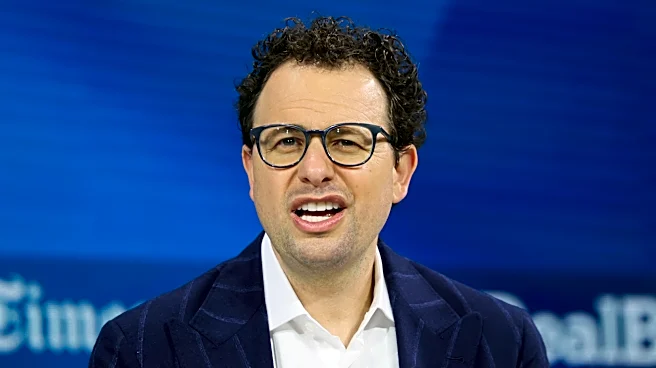
Mike Krieger, co-founder of Instagram and former Chief Product Officer at Anthropic, resigned from Figma's board of directors on April 14, 2026. This resignation occurred just three days before Anthropic launched its new product, Claude Design, on April 17,
2026. Claude Design is designed to enable users to transform static mockups into interactive prototypes, a functionality similar to what Figma Make, powered by Anthropic's Claude, offers. According to The Information, Anthropic had previously approached both Figma and Canva to be 'partners' for the Claude Design announcement. While Canva's CEO was quoted in the announcement, Figma was not mentioned. Figma's official filing stated that Krieger's resignation was not due to any disagreement. Krieger had transitioned to Anthropic Labs in January 2026, prior to his board resignation and the Claude Design launch. This sequence of events has drawn attention to the competitive dynamics between AI model providers and their customers in the design software space.
Why It's Important?
This development highlights the complex and potentially competitive relationship between AI model providers and the companies that integrate their technology. For Figma, a key customer utilizing Anthropic's Claude for its 'Make' feature, the launch of Claude Design by its supplier introduces a direct competitor in the interactive prototyping market. This situation raises questions about vendor lock-in, intellectual property, and the strategic risks for companies that rely heavily on third-party AI models for core functionalities. It also underscores the rapid pace of innovation in the AI sector, where suppliers can quickly evolve from providing underlying technology to offering end-user products that compete with their own customers. The incident could influence how other companies approach partnerships with AI providers, potentially leading to more stringent contractual agreements or a diversification of AI model sources to mitigate competitive risks. The broader implications touch upon the evolving landscape of software development, where AI capabilities are increasingly becoming product features rather than just backend tools.
What's Next?
The immediate future will likely see increased competition between Figma and Anthropic's Claude Design in the interactive prototyping market. Figma may need to differentiate its offerings more strongly or explore alternative AI partnerships to maintain its market position. Other companies that build products on top of foundational AI models might re-evaluate their strategies, considering the potential for their AI suppliers to become direct competitors. This could lead to a trend of companies investing more in proprietary AI development or seeking multi-vendor AI strategies to reduce dependency. The situation may also prompt discussions within the tech industry about ethical guidelines and best practices for AI model providers when their product roadmaps intersect with those of their customers. Legal frameworks around intellectual property and competitive practices in the AI space may also face scrutiny as these scenarios become more common.
Beyond the Headlines
This event delves into the deeper implications of the 'supplier as competitor' dynamic, a phenomenon that has historical parallels in various industries but is amplified by the rapid evolution of AI. The ease with which AI models can be adapted and deployed into new applications means that the line between a technology provider and a product vendor can quickly blur. This raises ethical questions about data usage and competitive fairness, even in the absence of explicit disagreements or intellectual property infringements. The concept of 'distillation,' where one AI model learns from another's outputs, further complicates these dynamics, as it allows for rapid iteration and competitive product development. The case also reflects a broader shift in the tech ecosystem where companies must constantly assess the strategic risks of relying on external platforms and tools, especially when those platforms possess the capability to move up the value chain and directly address end-user needs. This could foster a more insular approach to core technology development among companies seeking to protect their market share.