




What's Happening?
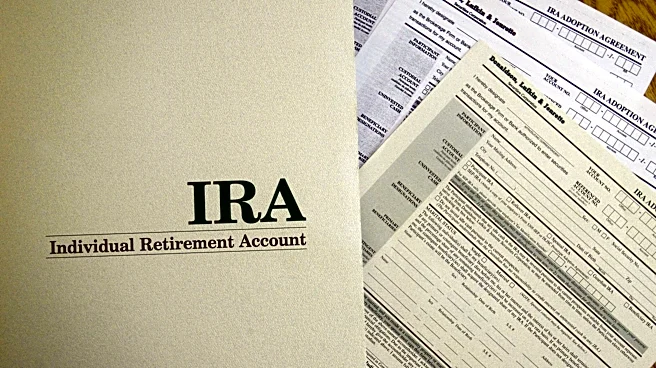
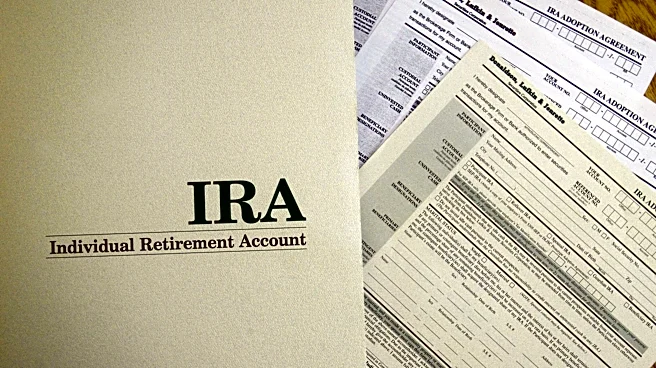
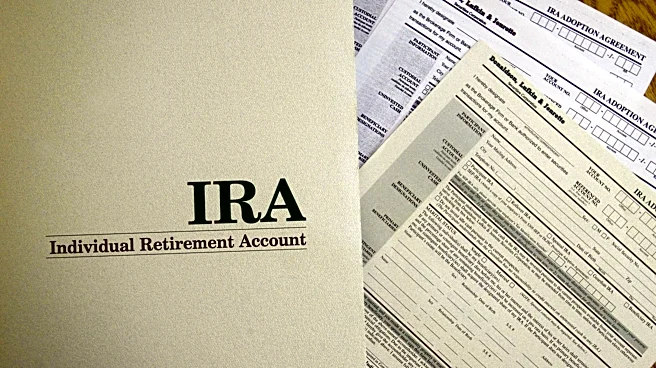
A recent analysis details strategies for generating tax-free dividend income within a Roth IRA, particularly for individuals aged 59½ or older who have met the five-year contribution period. The article outlines how a Roth IRA can make dividend income invisible
to the IRS, a significant advantage for investments that typically incur ordinary income tax in a standard brokerage account, such as covered-call funds, Business Development Companies (BDCs), REITs, and preferred stocks. The amount of capital required to achieve a target monthly income, such as $6,575, varies significantly based on the chosen yield level. For instance, a conservative 3.5% yield would necessitate approximately $2,254,000, while an aggressive 12% yield could achieve the same income with about $657,500. A blended portfolio with an 8.3% yield would require around $954,000 to generate $6,575 per month.
Why It's Important?
This information is crucial for U.S. individuals planning for retirement, especially those seeking to maximize their tax-free income streams. The ability to receive substantial dividend income without federal tax implications can significantly enhance financial security in retirement. The article highlights a common retirement risk: a falling market. By living on dividends, retirees can avoid selling shares at low prices to cover expenses, thus preserving their principal. However, it also underscores the trade-offs between different yield levels; higher yields often come with increased risk of payout cuts or principal erosion, while lower yields, though requiring more initial capital, tend to offer more stable and growing payouts over time. Understanding these dynamics is vital for making informed investment decisions that align with individual risk tolerance and income needs.
What's Next?
Individuals considering these strategies are advised to carefully review IRS Publication 590-B for 2025 to ensure compliance with Roth IRA withdrawal rules, particularly the five-year period requirement and the age threshold. Prospective investors should also conduct thorough due diligence on the specific funds and stocks mentioned, such as the Goldman Sachs Nasdaq-100 Premium Income ETF, Invesco High Yield Equity Dividend Achievers ETF, Lamar Advertising, Hercules Capital, Cohen & Steers Quality Income Realty Fund, and Invesco Variable Rate Preferred ETF. It is recommended to stress-test any proposed portfolio by considering potential reductions in payouts, especially for higher-yielding investments, to ensure the income stream remains sufficient even in adverse market conditions. The emphasis on growing payouts for long-term income sustainability suggests that a balanced approach, combining high-yield and growth-oriented investments, may be optimal.
Beyond the Headlines
The detailed breakdown of Roth IRA dividend strategies points to a broader trend in retirement planning: a shift towards income-generating assets that offer tax advantages. This approach reflects a growing awareness among retirees of the importance of predictable cash flow and tax efficiency in managing post-employment finances. The article implicitly addresses the challenge of inflation, noting that growing payouts are essential to maintain purchasing power over two decades. The discussion of various investment vehicles, from REITs to BDCs and covered-call funds, highlights the complexity and diversity of options available to investors, necessitating a sophisticated understanding of risk and return. Ultimately, the emphasis on a 'dividend ladder' strategy suggests a proactive and structured approach to retirement income, moving beyond simple asset accumulation to strategic income generation and preservation.