






What's Happening?
Advanced Micro Devices (AMD) hardware is now powering the Lux SI + HPC supercomputer at Oak Ridge National Laboratory. This system is described as the first dedicated U.S. AI Factory for the Department of Energy's Genesis Mission. The Lux supercomputer integrates
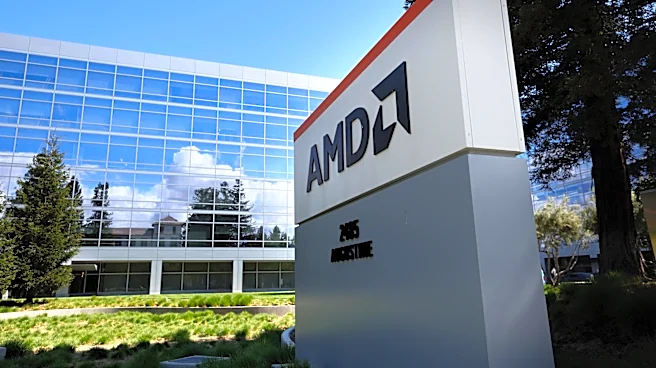
AMD EPYC CPUs, Instinct GPUs, Pensando networking, and ROCm software into a unified AI and High-Performance Computing (HPC) platform. This deployment provides AMD with new visibility in U.S. government-scale AI infrastructure. AMD, a U.S. semiconductor company with a market capitalization of $703.6 billion, designs CPUs, GPUs, and related data center hardware crucial for high-performance computing and AI systems, making it a key competitor for major government and research compute projects like the Genesis Mission.
Why It's Important?
This development is significant for AMD as it reinforces its strategy to become a comprehensive AI infrastructure provider, moving beyond just a chip vendor. The Lux supercomputer serves as a high-profile reference platform at Oak Ridge, showcasing AMD's full hardware and software stack in real scientific workloads. This public deployment of Instinct accelerators and ROCm software in a U.S. government project can catalyze wider adoption and accelerate the ramp-up of these technologies, potentially leading to stronger data center margins for AMD. For the U.S. government and the Department of Energy's Genesis Mission, this AI Factory represents a crucial step in advancing national AI capabilities and research, leveraging cutting-edge technology for complex scientific endeavors.
What's Next?
Investors and industry observers will be closely watching for future signals from AMD regarding the impact of the Lux supercomputer. The most direct indicator of its significance will be whether AMD's management begins to highlight Lux and Genesis Mission workloads in upcoming data center commentary or case studies. This includes references to Lux-driven ROCm usage, Instinct deployments, or subsequent AI Factory projects that utilize the same AMD stack during earnings calls and technical briefings. The success and visibility of this project could influence future government contracts and further solidify AMD's position in the rapidly expanding AI infrastructure market.