







What's Happening?
A recent study conducted by Florida International University kinesiologist Jason Kostrna and his team has found that popular fitness wearables significantly overestimate the number of calories burned during exercise. The research, published in the journal
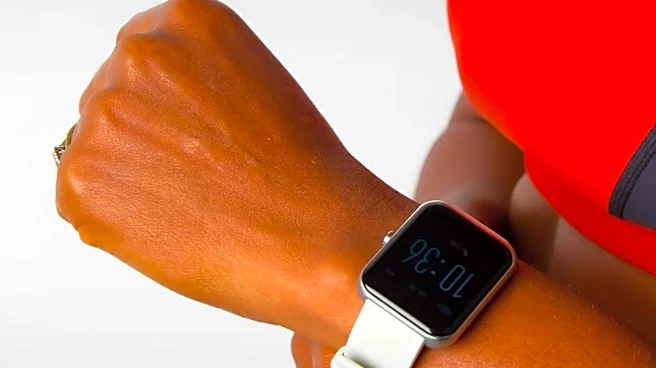
PLOS One, compared four leading smartwatches—Apple Watch Series 8, Samsung Galaxy Watch 5, Fitbit Sense 2, and Garmin Forerunner 955—against clinical-grade measurement equipment, specifically a COSMED K5 metabolic analyzer. Fifty-eight adult volunteers participated in controlled stationary bike workouts, alternating between moderate and intense activity. The findings indicate that smartwatches overstate calorie expenditure by 15 to 25 percent. The Apple Watch showed the smallest margin of error, while Garmin and Samsung exhibited higher overestimations. Fitbit devices were excluded from the final analysis due to frequent glitches and inconsistent readings during the experiments. The study also noted that accuracy decreased for users with higher body fat percentages, though the exact reason remains unclear.
Why It's Important?
This research has significant implications for individuals relying on fitness trackers for weight management and health goals. An overestimation of 15-25% in calorie burn can lead to a substantial calorie surplus over time, potentially hindering weight loss efforts or even contributing to weight gain, as users might consume more calories than they actually expended. For instance, a reported 500-calorie workout could actually be closer to 350 calories. This discrepancy can undermine dietary strategies and fitness plans, leading to frustration and a lack of progress. The findings also highlight a transparency issue within the tech industry, as the algorithms used by these devices to calculate calorie burn are proprietary and not subject to public scrutiny. This lack of transparency makes it difficult for consumers and researchers to understand the basis of these estimations and for companies to refine their products effectively.
What's Next?
The study's authors suggest that consumers should view calorie burn data from smartwatches as generous estimates rather than precise figures. Individuals with higher body fat percentages may need to interpret these numbers even more conservatively. Researchers hope that these findings will encourage tech companies to refine their algorithms and improve the accuracy of calorie expenditure tracking in future device iterations. While smartwatches remain useful for tracking general activity, steps, and heart rate trends, users aiming for precise calorie management might need to consider alternative methods or adjust their expectations. Future research may delve deeper into the reasons behind the reduced accuracy for individuals with higher body fat and explore ways to enhance the reliability of these widely used devices.
Beyond the Headlines
The study touches upon broader themes concerning the intersection of technology, health, and consumer trust. The reliance on wearable technology for personal health metrics has grown exponentially, yet the accuracy of some key features, like calorie counting, is now under scrutiny. This raises questions about the responsibility of tech companies to provide transparent and validated health data. Ethically, misleading calorie counts could inadvertently promote unhealthy behaviors, such as overeating based on perceived higher energy expenditure. Legally, if these devices are marketed with claims of precise calorie tracking, there could be implications for consumer protection. Culturally, there's a growing trend of data-driven self-optimization, and inaccuracies in fundamental metrics can erode confidence in these tools, potentially leading to a more critical evaluation of health tech claims by the public.