






What's Happening?
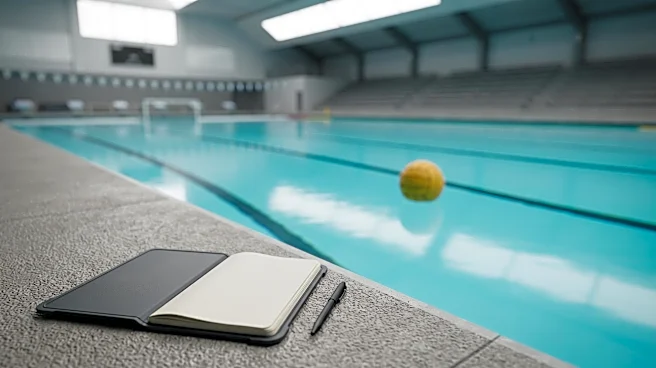
The Los Altos High School water polo team has adopted journaling as a core component of their practice routine, a method introduced by Spanish Olympic water polo player Beatrice Ortiz. Head coach Seth Tasman, inspired by Ortiz's national team routines,
began his own journaling practice before implementing it with the team. This initiative encourages athletes to express thoughts, set goals, and enhance team chemistry through open-ended prompts. Junior Ronnie Tseung noted that team members are generally willing to share their reflections, fostering a more connected environment. The journaling sessions occur before and during practice, incorporating mental strategies like visualization, where players mentally rehearse game situations to prepare for future challenges. This practice aims to improve individual performance and strengthen the team's collective mental resilience.
Why It's Important?
The integration of journaling into high school sports highlights a growing recognition of mental health and psychological preparedness in athletic performance. This approach moves beyond traditional physical training to address the cognitive and emotional aspects of competition. For student-athletes, journaling can be a valuable tool for self-reflection, stress reduction, and goal setting, skills that extend beyond the sports arena into academic and personal life. By encouraging open expression and shared reflections, the program also fosters a stronger sense of community and support among teammates, potentially reducing feelings of isolation and promoting a more positive team culture. This initiative could serve as a model for other athletic programs seeking to enhance athlete well-being and performance through holistic methods, emphasizing that mental toughness is as crucial as physical prowess.
What's Next?
The Los Altos High School water polo team plans to continue utilizing journaling as a regular part of their training regimen. The ongoing practice will likely involve further development of prompts and sharing sessions to deepen self-awareness and team bonding. As junior Ronnie Tseung emphasized the importance of controlling emotions during games, future journaling efforts may focus on strategies for maintaining composure under pressure. The team also intends to use journaling to document new strategies, defenses, offenses, and schemes learned during film sessions and practices, aiding in the retention and application of tactical knowledge. The success of this program could lead to its expansion within the school's athletic department or inspire other high school sports teams to adopt similar mental preparation techniques, potentially influencing broader trends in youth sports development.
Beyond the Headlines
This adoption of journaling in high school sports reflects a broader societal shift towards prioritizing mental well-being and emotional intelligence, even in competitive environments. Historically, sports have often emphasized physical strength and skill, with less attention paid to the psychological demands on athletes. The move towards journaling signifies a more holistic understanding of athlete development, acknowledging that mental resilience, emotional regulation, and self-awareness are critical for sustained success and overall well-being. This trend could lead to a re-evaluation of coaching methodologies across various sports, promoting practices that nurture both the physical and mental aspects of athletes. Furthermore, by encouraging open communication and vulnerability within a team setting, journaling can help destigmatize discussions around mental health, creating a more supportive and understanding environment for young individuals navigating the pressures of competition and adolescence.