








What's Happening?
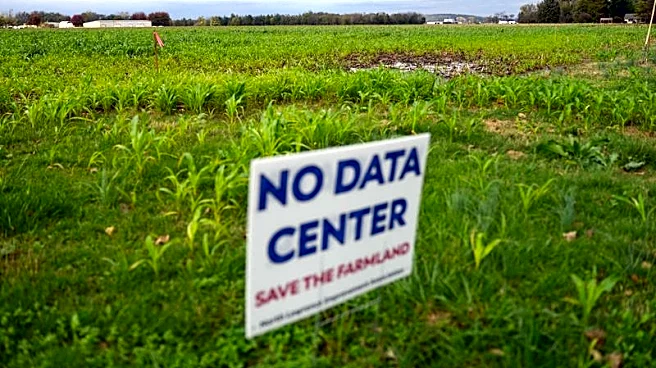
Plans for a billion-dollar data center in Bartow County, Georgia, are facing opposition from some local residents, despite receiving approval for a site off State Route 293. The project involves clearing a 560-acre site to construct a 350,000-square-foot
computing facility. Residents like Angela Hogue and James Nation express strong disapproval, citing concerns about environmental damage, increased water consumption, higher electric bills, and noise pollution. They argue that the area does not need another data center. Conversely, the city government of Kingston, with a population of just over 700, supports the project due to the anticipated tax revenue. The developer claims the data center will generate a minimum of $2 million in taxes and fees annually, which is double the city's budget, and could support property tax relief and infrastructure upgrades. The project is also expected to create numerous construction jobs and 50 to 100 high-paying permanent positions.
Why It's Important?
This conflict highlights a common tension between economic development and community concerns in the U.S. The proposed data center represents a significant investment and promises substantial tax revenue and job creation, which are attractive benefits for local governments, especially in smaller communities like Kingston. However, residents' concerns about environmental impact, resource strain (like water and electricity), and quality of life issues (noise) are valid and often overlooked in the pursuit of economic growth. The debate in Bartow County reflects broader national discussions about the sustainability of large-scale industrial developments, particularly data centers, which are known for their high energy and water consumption. The outcome of this pushback could influence future development projects in similar communities, potentially leading to more stringent environmental reviews or community benefit agreements.
What's Next?
While the data center project has received site approval, the developer has not yet released a timeline for construction or completion. The ongoing pushback from residents suggests that community opposition may continue, potentially leading to further advocacy efforts or attempts to influence local decision-makers. The city of Kingston will likely continue to weigh the economic benefits against resident concerns. Future developments could include public forums, environmental impact assessments, or negotiations between the developer and community groups to address specific grievances. The project's progression will depend on how these various stakeholders navigate the balance between economic opportunity and environmental and social responsibility. The creation of jobs and tax revenue will be a key factor for the city, while residents will focus on mitigating potential negative impacts.