








What's Happening?
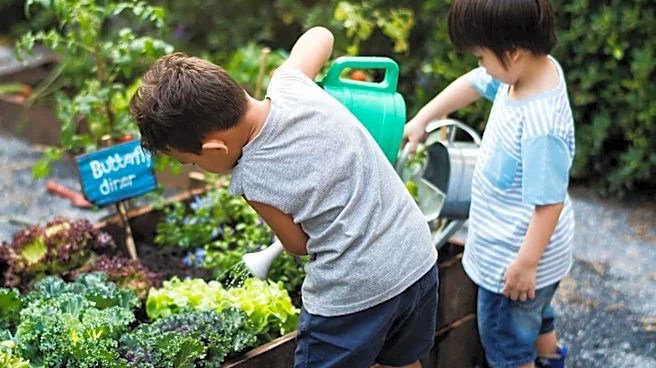
The Seeds of Knowledge Creative Learning Center in Detroit, led by founder and CEO ChaVonne McGowan, is implementing a children's garden program that teaches young students about agriculture and healthy eating. Each child is responsible for caring for their
own plant, learning about plant growth, soil, seasons, and the role of insects like bees. McGowan emphasizes that the program goes beyond planting seeds, focusing on teaching responsibility, building confidence, and fostering communication skills. Through monthly 'Taste Test Fridays,' children sample the produce they've grown, encouraging them to try new fruits and vegetables. Research from the Community Preventive Services Task Force supports these efforts, indicating that youth gardening programs can increase vegetable intake and promote healthier eating habits in children aged 2 to 18.
Why It's Important?
This initiative is crucial for addressing public health challenges in U.S. communities, particularly in urban areas like Detroit, where access to fresh produce and nutritional education can be limited. By engaging children directly in growing their own food, the program instills healthy eating habits from a young age, potentially combating childhood obesity and related health issues. It also provides valuable STEM education, teaching practical science and environmental stewardship. For the community, the program offers fresh produce for sale on 'Taste Test Fridays,' creating a local food source and fostering community engagement. The development of responsibility, confidence, and communication skills among children also contributes to their overall social and emotional development, preparing them for future success.
What's Next?
The success of programs like the Seeds of Knowledge children's garden could inspire similar initiatives in other U.S. cities and educational institutions. There is potential for increased funding and support for youth gardening programs from government agencies, non-profits, and private organizations, recognizing their multifaceted benefits. The model could be replicated in schools, community centers, and after-school programs, expanding access to hands-on agricultural education. Further research may also explore the long-term impacts of such programs on dietary choices, academic performance, and community health outcomes. The emphasis on practical skills and healthy habits suggests a growing trend towards experiential learning in early childhood education.
Beyond the Headlines
Beyond the immediate benefits of healthy eating and education, the Detroit children's garden program addresses deeper societal issues such as food deserts and environmental literacy. By empowering children to grow their own food, it fosters a sense of agency and self-reliance, which can be particularly impactful in underserved communities. The program also cultivates an appreciation for nature and ecological processes, potentially leading to a more environmentally conscious generation. Ethically, it highlights the importance of equitable access to nutritious food and quality education. Culturally, it reinforces the value of community engagement and intergenerational learning, as exemplified by parent volunteers who were once students of McGowan. This initiative represents a holistic approach to community development, nurturing both individual children and the broader urban environment.