
What's Happening?
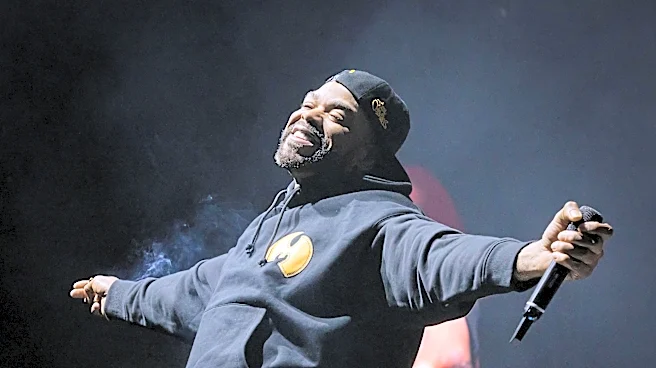
Cliff 'Method Man' Smith, a member of the Wu-Tang Clan, guest stars in the seventh episode of the CBS legal drama 'Cupertino,' titled 'YUNGWOOD.' In the episode, Method Man portrays fictional rapper YUNGWOOD,
who is involved in a legal dispute with an AI music studio. The studio is accused of negatively impacting YUNGWOOD's career and earnings by releasing AI-generated versions of his music. During a courtroom scene, YUNGWOOD, while holding a guitar, testifies about the creative process behind his hit song 'Booty Bass.' He asserts that his music originates 'from the soul,' contrasting it with AI, which he claims 'has no intuition, no scars, no history. Without that, you can’t create; you can only copy.' This scene highlights the ongoing debate within the entertainment industry regarding the authenticity and impact of artificial intelligence on artistic creation.
Why It's Important?
Method Man's character's testimony in 'Cupertino' serves as a fictional yet potent commentary on the real-world anxieties and ethical concerns surrounding AI-generated music. The statement that AI 'can only copy' but not 'create' directly addresses the core fear among many artists: that AI technology, while capable of replication, lacks the human experience, emotion, and originality that define true artistry. This narrative reflects the broader sentiment among musicians who feel their creative work and identities are being devalued or exploited by AI. The legal battle depicted in the show mirrors actual lawsuits being filed against AI music generators, underscoring the relevance of these issues to the entertainment industry's future. The episode brings these complex discussions to a mainstream audience, potentially influencing public perception and contributing to the ongoing dialogue about intellectual property rights and artistic integrity in the digital age.
What's Next?
The 'Cupertino' episode, airing on November 12, will likely spark further discussion among viewers and within the music and legal communities about the implications of AI in creative fields. While a fictional portrayal, it adds to the growing chorus of artists and industry figures expressing reservations about AI's role in music. This cultural commentary could contribute to increased pressure on AI developers and policymakers to establish clearer guidelines and regulations for AI-generated content, particularly concerning copyright, artist likeness, and fair compensation. The episode's depiction of a legal battle over AI-generated music may also encourage more artists to pursue legal action or advocate for stronger protections against unauthorized use of their work and identity by AI systems.
Beyond the Headlines
The 'Cupertino' episode delves into the philosophical debate about what constitutes 'art' and 'creativity' when machines can generate content that mimics human output. YUNGWOOD's assertion that music comes 'from the soul' and requires 'intuition, scars, history' highlights the intrinsic human element often associated with artistic expression. This raises questions about whether AI, by its very nature, can ever truly be 'creative' or if it is merely a sophisticated tool for imitation and recombination. The episode also touches on the economic impact of AI on artists, as YUNGWOOD's career and earnings are negatively affected. This points to the broader challenge of ensuring that artists are fairly compensated and their intellectual property is protected in an era where AI can rapidly produce and disseminate content that blurs the lines of originality. The show's narrative serves as a cultural touchstone for these complex and evolving discussions.