


What's Happening?
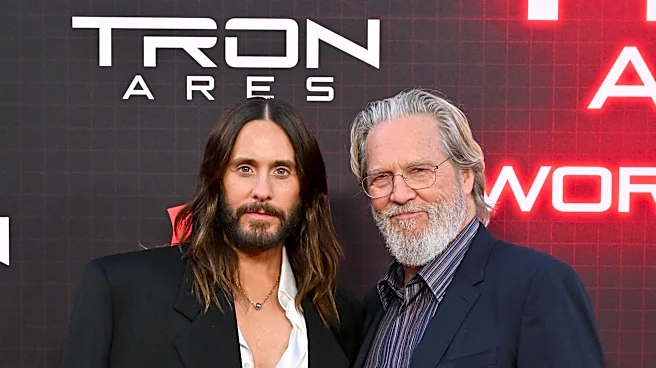
Disney has reportedly canceled plans for 'Tron 4' after 'Tron Ares,' starring Jared Leto, significantly underperformed at the global box office. 'Tron Ares' was intended to revitalize the franchise, with its ending setting up a sequel that would feature
the protagonists from 'Tron Legacy,' Sam (Garrett Hedlund) and Cora (Olivia Wilde). However, the film, which had a budget of $220 million, is projected to earn less than $200 million worldwide, falling short of the $400 million earned by 'Tron Legacy' 15 years prior. The Hollywood Reporter indicated that Disney is now likely to 'retire' Tron as a cinematic event, shifting its focus to using the intellectual property for theme park rides, video games, and potentially a television show. This decision reflects a broader trend of studios re-evaluating franchise continuations based on financial performance.
Why It's Important?
The cancellation of 'Tron 4' signifies a cautious approach by Disney towards high-budget franchise films that do not meet box office expectations. This move could influence other major studios to be more conservative in greenlighting sequels, especially for properties that have not demonstrated consistent commercial success. For the entertainment industry, it highlights the increasing pressure on tentpole films to deliver substantial returns, impacting creative decisions and investment strategies. Fans of the Tron franchise will likely be disappointed, as this decision effectively halts the cinematic continuation of the story. The shift towards theme park attractions and video games suggests a strategy to leverage established IPs in other lucrative markets, potentially indicating a future trend for underperforming film franchises.
What's Next?
Following the reported cancellation of 'Tron 4,' Disney is expected to redirect its efforts for the Tron intellectual property towards other media. This includes further development of Tron-themed attractions in its theme parks, expansion into video games, and potentially exploring television series. This strategic pivot aims to capitalize on the brand's recognition without the high financial risk associated with major cinematic releases. The decision may also lead to a re-evaluation of other long-dormant or underperforming franchises within Disney's portfolio, potentially leading to similar shifts in how those IPs are utilized. The entertainment industry will be watching to see if this strategy proves successful in maintaining brand relevance and profitability without the traditional movie sequel model.
Beyond the Headlines
The decision to pivot the Tron franchise from film to other media like theme park rides and video games reflects a broader industry trend where intellectual property is viewed as a multi-platform asset rather than solely a cinematic one. This approach allows studios to diversify revenue streams and engage audiences through various interactive experiences, potentially extending the lifespan of a brand even if its film iterations struggle. It also underscores the evolving landscape of audience consumption, where immersive experiences and gaming often compete with traditional cinema for attention and investment. This could lead to a future where the success of a film is not just measured by box office numbers but also by its ability to drive engagement and revenue across a wider ecosystem of products and experiences.