





What's Happening?
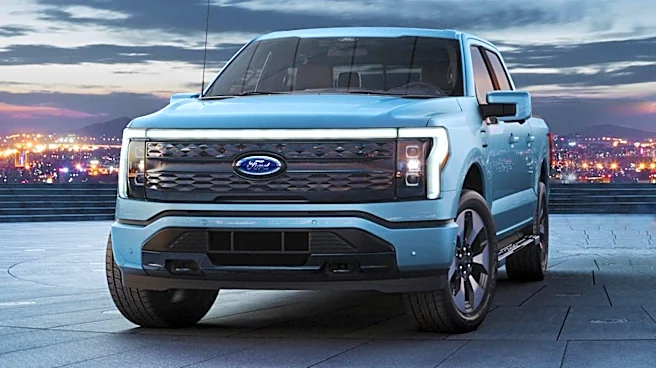
Ford has commenced shipments of its first lithium iron phosphate (LFP) battery cells from its new BlueOval Battery Park in Marshall, Michigan, to the Louisville Assembly Plant in Kentucky. These prismatic cells are intended to power early prototypes and
validation vehicles for the Ford Fathom, an all-electric midsize pickup truck slated for release in late 2027. The Michigan plant, a $3 billion, 2 million-square-foot facility, is designed to produce 20 gigawatt-hours of batteries annually and will employ 1,700 people. Ford is utilizing technology licensed from CATL, a Chinese battery manufacturer, but asserts that the plant is entirely U.S.-owned, staffed, and operated, ensuring compliance with Inflation Reduction Act (IRA) requirements. The company aims to produce 40 cells per minute, making it one of the fastest LFP prismatic lines outside China. While cell production has begun, the facility's battery pack manufacturing section is still undergoing validation, with full pack deliveries to Louisville expected by 2027.
Why It's Important?
This development marks a significant step for Ford in its strategy to produce more affordable electric vehicles and gain greater control over its battery supply chain. By manufacturing LFP batteries in the U.S., Ford aims to reduce costs, as LFP chemistry does not use nickel or cobalt, and to qualify for IRA manufacturing credits. The Fathom pickup is projected to start at an estimated price of $29,945, including destination fees, making it a competitive option in the EV market. This domestic production also supports job creation in Michigan and Kentucky, aligning with broader U.S. goals for energy independence and advanced manufacturing. The move could also influence other automakers to localize their battery production to leverage cost efficiencies and government incentives, potentially accelerating the transition to EVs in the U.S. market.
What's Next?
Ford plans to ramp up cell production at the BlueOval Battery Park in Michigan throughout the next year. The battery pack manufacturing facility in Marshall is expected to be fully operational by 2027, ahead of the Fathom's launch. Preorders for the Fathom are anticipated to open in early 2027, with the vehicle's official launch scheduled for the fourth quarter of 2027. The knowledge and processes developed at the Michigan plant will also be shared with Ford's Glendale, Kentucky plant, which is being retooled to produce LFP cells for large-scale energy storage applications under Ford Energy. Ford will continue to refine its manufacturing processes, aiming for extremely low defect rates, as it prepares for full-scale production and delivery of the Fathom.
Beyond the Headlines
Ford's decision to license technology from CATL for its U.S. battery production has drawn scrutiny from some lawmakers concerned about ties to Chinese companies. Despite these concerns, Ford emphasizes its full ownership and operational control of the Michigan plant, asserting its IRA compliance. This approach highlights the complex balance between leveraging established global expertise to accelerate domestic manufacturing capabilities and addressing geopolitical sensitivities. The success of Ford's LFP battery strategy could set a precedent for how U.S. companies navigate international partnerships while bolstering domestic production. Furthermore, the focus on LFP batteries, known for their durability and lower cost, could democratize EV ownership, making electric vehicles more accessible to a broader consumer base and potentially accelerating the overall adoption of EVs in the U.S.