





What's Happening?
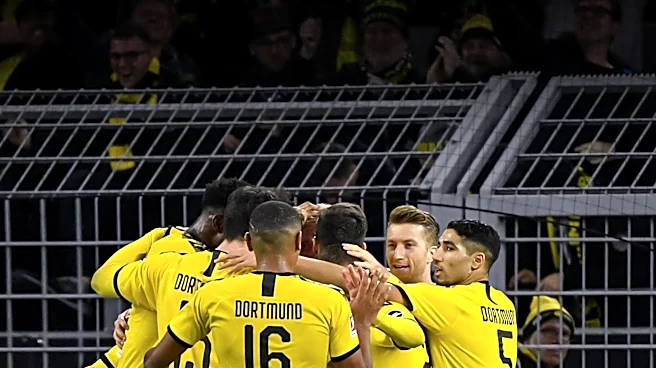
Vodafone, in partnership with Borussia Dortmund, has successfully recreated the first-ever goal in the Bundesliga's history, scored by Timo Konietzka on August 24, 1963. This landmark moment, which occurred just seconds into the league's opening match
against SV Werder Bremen, was never captured on camera. To bring this lost piece of football history to life, Vodafone's AI experts analyzed archival material, media reports, and match data. They also interviewed eyewitnesses, including BVB historian Gerd Kolbe, Konietzka's brother, and fan club chairman Eugen Kraas, to gather personal experiences. The reconstruction involved Borussia Dortmund's under-19 team reenacting the goal and the sequence of play, providing crucial movement and detail. This human input was then combined with AI models to analyze the information and generate the imagery, resulting in 'The Unseen Goal,' a video recreation that allows fans to experience the moment with moving images and sound for the first time.
Why It's Important?
This project highlights the growing intersection of technology and sports, demonstrating how artificial intelligence can be used to preserve and bring historical moments to life, even when traditional records are absent. For sports organizations, this offers a new avenue for fan engagement and the creation of unique content, potentially attracting new audiences and deepening the connection with existing ones. The use of AI in this context also showcases its capabilities beyond data analysis, extending into creative and reconstructive applications. It sets a precedent for how historical gaps in sports, or other fields, could be filled, offering a richer understanding and experience of past events. Furthermore, it underscores the importance of combining human expertise and historical accounts with technological advancements to achieve accurate and compelling results.
What's Next?
The success of 'The Unseen Goal' could pave the way for similar projects in sports and other historical domains where visual records are incomplete or non-existent. Other sports leagues and teams might explore using AI and human reenactment to reconstruct significant moments from their past, creating new content for documentaries, fan experiences, and educational purposes. This could lead to a broader adoption of AI-driven historical reconstruction, potentially influencing how archives are managed and how historical narratives are presented. The collaboration between technology companies like Vodafone and sports entities like Borussia Dortmund also suggests a future trend of cross-industry partnerships focused on innovative content creation and historical preservation.
Beyond the Headlines
Beyond the immediate impact on football fans, this initiative touches upon deeper implications regarding the nature of historical documentation and memory. In an age where nearly every event is digitally recorded, this project reminds us of the vast amount of history that predates widespread recording technology. It raises questions about how we value and preserve such 'unseen' moments and the ethical considerations involved in recreating them. The blend of human memory and AI interpretation also highlights the subjective and objective elements of historical understanding. It suggests that technology can not only fill gaps but also offer new perspectives on events, potentially shaping how future generations interact with and learn about the past. This project serves as a powerful example of how technology can enhance cultural heritage and collective memory.