



What's Happening?
WeShop AI has launched a new Virtual Try-On feature designed for e-commerce businesses. This tool allows retailers to superimpose garments, accessories, and other product looks onto images of people or models, enabling shoppers to preview styles before
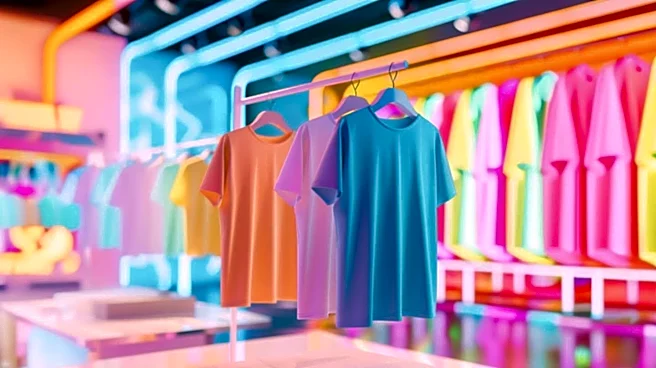
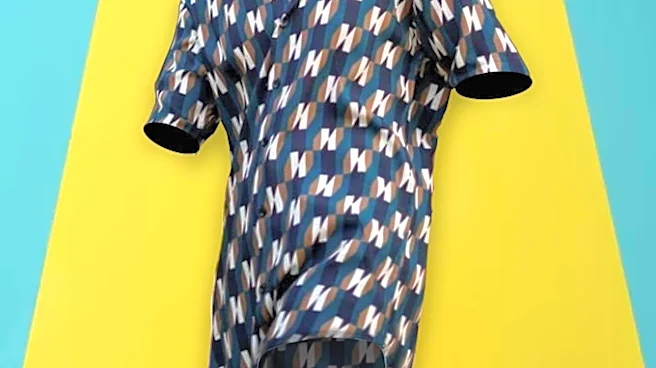
making a purchase. The technology focuses on fitting and merchandising, utilizing AI to generate realistic representations of how products would appear on a person. Unlike generic image generators, WeShop AI's Virtual Try-On relies on the source garment or model photo to drive the final output, ensuring accuracy in garment shape, fabric realism, and pose fit. This feature is part of a broader suite of e-commerce visual studio tools offered by WeShop AI, which also includes product photography, image-to-video conversion, and product video shoots.
Why It's Important?
The introduction of WeShop AI's Virtual Try-On is significant for the U.S. e-commerce industry, particularly for fashion and apparel retailers. This technology addresses a critical challenge in online shopping: the inability for customers to physically try on items. By providing a realistic virtual preview, businesses can potentially reduce return rates, enhance customer satisfaction, and increase conversion rates. For consumers, it offers a more confident purchasing experience, minimizing guesswork about how an item will look. The tool's focus on realism in garment shape and fabric texture could set a new standard for online product presentation, pushing other e-commerce platforms and brands to adopt similar advanced visualization technologies to remain competitive in the digital marketplace. This innovation could also streamline the product photography process for businesses, reducing the need for extensive physical photoshoots.
What's Next?
E-commerce businesses are likely to explore and integrate WeShop AI's Virtual Try-On and similar technologies to enhance their online storefronts. The adoption of such tools could lead to a more immersive and interactive online shopping experience for consumers. We can anticipate further advancements in AI and augmented reality to refine the accuracy and realism of virtual try-on features, potentially incorporating more personalized fit recommendations. The success of these tools will likely be measured by their impact on sales, customer engagement, and return rates. As more retailers embrace virtual try-on, it could become a standard expectation for online shoppers, driving further innovation in digital merchandising and product visualization across various sectors beyond fashion, such as eyewear and accessories.
Beyond the Headlines
The rise of virtual try-on technology like WeShop AI's has deeper implications for consumer behavior and the future of retail. It blurs the lines between physical and digital shopping experiences, potentially leading to a hybrid model where consumers increasingly rely on virtual tools for initial product assessment before making a purchase. This shift could also influence product design and manufacturing, with a greater emphasis on digital rendering and 3D modeling from the outset. Ethical considerations regarding data privacy and the use of personal images for virtual try-on will become more prominent. Furthermore, the technology could democratize fashion, allowing smaller brands to present their products with high-quality visuals without the prohibitive costs of traditional photoshoots, fostering greater competition and diversity in the e-commerce landscape.