




What's Happening?
Janos Prohaska, a Hungarian actor and stuntman, was a prolific performer in American television during the 1960s, despite often being in costume. He was notably recognized for his roles as a gorilla on the CBS sitcom 'Gilligan's Island' and for portraying
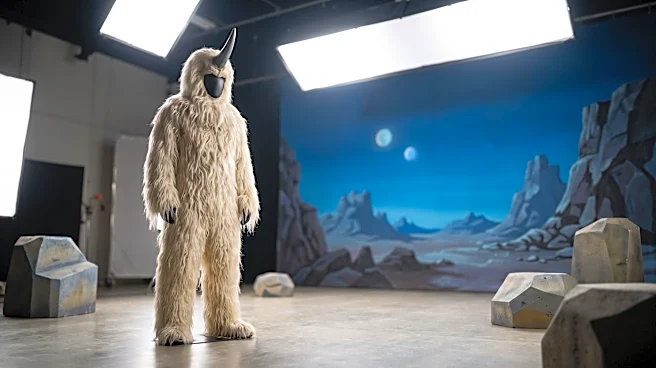
various aliens in 'Star Trek'. Prohaska was known for creating his own costumes, including a rubber, leather, and yak hair ape suit, due to the difficulty of finding suitable attire for his 5'4" frame. On 'Gilligan's Island', his gorilla character appeared multiple times, sometimes as an antagonist to Gilligan, and he also played an orangutan. In 'Star Trek', Prohaska was involved from the pilot episode, playing both apelike and birdlike aliens. He also portrayed the Horta in 'The Devil in the Dark', an alien he helped design by modifying an existing costume from 'The Outer Limits'. His other 'Star Trek' appearances included the Mugato, created by adding a horn to an albino ape suit he had previously used, and the Excalbian alien Yarnek.
Why It's Important?
Janos Prohaska's career highlights the significant, often uncredited, contributions of character actors and stunt performers to iconic television series. His ability to create and adapt his own elaborate costumes demonstrates a unique blend of artistic skill and practical ingenuity that was crucial for special effects in early television. Prohaska's recurring roles in popular shows like 'Gilligan's Island' and 'Star Trek' underscore his versatility and impact on the visual storytelling of the era. His work on 'Star Trek', particularly his involvement in designing creatures like the Horta, showcases how performers could influence the creative direction of a show, contributing to the memorable and diverse alien species that became a hallmark of the franchise. This also sheds light on the resourcefulness of television production in the 1960s, where budget constraints often necessitated creative solutions from cast and crew.
What's Next?
While Janos Prohaska's career ended tragically with his death in a plane crash in 1974 during the production of a TV series, his legacy continues through the enduring popularity of the shows he contributed to. Reruns and streaming services ensure that his performances, though often hidden behind elaborate costumes, remain visible to new generations of viewers. His work serves as a historical example for aspiring character actors and costume designers, illustrating the potential for creative input and lasting impact even in roles that do not feature a performer's face. The continued appreciation for classic television series like 'Gilligan's Island' and 'Star Trek' means that Prohaska's contributions will likely continue to be recognized and studied within the context of television history and special effects development.
Beyond the Headlines
Prohaska's story offers a deeper look into the often-overlooked craft of creature performance and costume design in early television. His self-made costumes, born out of necessity, represent a pioneering spirit in special effects, predating the sophisticated CGI and prosthetics of modern filmmaking. This highlights a period where practical effects and the physical performance of actors were paramount in bringing fantastical characters to life. The fact that he recycled and adapted costumes across different productions, such as using an 'Outer Limits' costume for 'Star Trek' and an ape suit from 'Voyage to the Bottom of the Sea' for the Mugato, illustrates the pragmatic and innovative approaches taken in television production during that era. His career underscores the artistry involved in physical acting and the creation of believable non-human characters, a skill set that remains vital in the entertainment industry.