






What's Happening?
Cellares, an Integrated Development and Manufacturing Organization (IDMO), has announced a partnership with Seoul National University Hospital (SNUH) to evaluate the automated manufacturing of gene-modified hematopoietic stem and progenitor cell (HSPC)
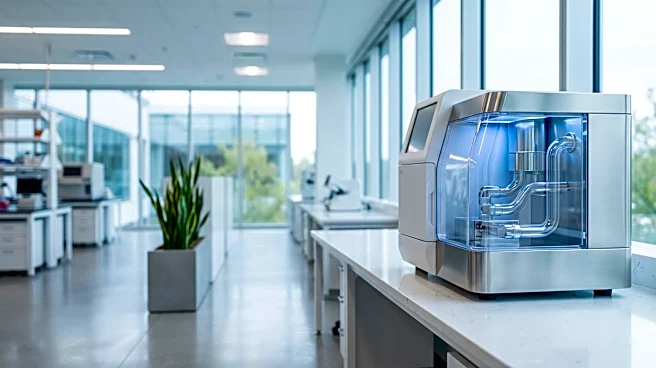
therapy. This collaboration focuses on developing a treatment for paroxysmal nocturnal hemoglobinuria (PNH) using Cellares' Cell Shuttle platform. The initiative aims to translate SNUH's gene-modified HSPC manufacturing process onto the Cell Shuttle, specifically incorporating a two-step transfection workflow through Cellares' integrated electroporation module. This marks Cellares' second collaboration in Asia and is designed to support SNUH's program as it moves towards future clinical development in the United States. The partnership will involve preclinical development and IND-enabling manufacturing workflows for SNUH's PNH program, with the ultimate goal of establishing a scalable manufacturing strategy for U.S. clinical trials.
Why It's Important?
This partnership is significant for the advancement of gene-modified HSPC therapies, particularly in addressing the current challenges of labor-intensive, variable, and difficult-to-scale manufacturing processes. By automating these complex workflows, Cellares and SNUH aim to improve manufacturing reliability, reduce costs, and ultimately enhance patient access to these life-saving treatments. The Cell Shuttle platform, which has received the FDA's Advanced Manufacturing Technology (AMT) designation and demonstrated a 100% automation success rate, offers a solution to these issues. This collaboration could set a precedent for more efficient and cost-effective production of cell therapies, making them more accessible to a broader patient population in the U.S. and globally. The focus on PNH, a rare blood disorder, highlights the potential for automated manufacturing to accelerate the development of treatments for conditions that currently have limited options.
What's Next?
The immediate next step for Cellares and SNUH is to conduct a proof-of-concept evaluation to assess the potential for automating SNUH's manufacturing process on the Cell Shuttle. This evaluation will focus on improving reliability, reducing manufacturing costs, and supporting broader patient access as the program progresses. Following successful preclinical development and IND-enabling manufacturing, the goal is to advance SNUH's PNH program towards clinical development in the United States. This will involve navigating regulatory processes with the FDA, potentially leveraging Cellares' participation in the FDA's Manufacturing PreCheck cohort, which allows for early and ongoing engagement with the FDA during facility development and application submission. The long-term vision is to establish a scalable manufacturing strategy that can support both clinical and commercial programs, expanding access to gene-modified HSPC therapies worldwide.
Beyond the Headlines
Beyond the immediate clinical and manufacturing implications, this partnership underscores a broader trend in the biopharmaceutical industry towards automation and advanced manufacturing technologies to overcome bottlenecks in cell and gene therapy production. The challenges of scalability, cost, and variability in traditional manufacturing methods have historically limited the reach of these innovative treatments. By demonstrating the efficacy of automated platforms like the Cell Shuttle, Cellares and SNUH are contributing to a paradigm shift that could democratize access to complex therapies. This collaboration also highlights the increasing international cooperation in medical research and development, with a South Korean institution leveraging U.S.-based advanced manufacturing capabilities to bring therapies to a global market, including the U.S. This could lead to more rapid development and deployment of cutting-edge medical solutions, ultimately benefiting patients with unmet medical needs.