


What's Happening?
U.S. gardeners can utilize common household items to protect plants from light frost, extending the growing season and safeguarding tender crops. Items such as cardboard boxes, old bed sheets, plastic milk jugs, bubble wrap, and newspapers can provide
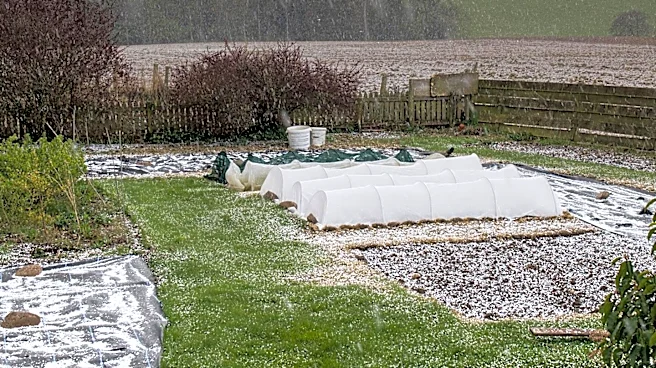
temporary insulation against chilly temperatures. For instance, flipping a cardboard box over a plant at dusk can shield it, while old bed sheets can cover larger areas. Plastic milk jugs, with their bottoms cut off, act as mini cloches for seedlings, and bubble wrap taped around patio pots can slow heat loss from roots. Newspapers, spread in layers, offer protection for low-growing plants. These methods are effective for light frosts, which typically whiten the lawn at dawn and dissipate by mid-morning, but are not sufficient for prolonged freezes. It is crucial to remove covers in the morning to prevent heat and moisture buildup, which can harm plants.
Why It's Important?
The use of household items for frost protection is important for U.S. gardeners as it offers an accessible and economical solution to a common horticultural challenge. This approach reduces the need for specialized, often costly, gardening supplies, making plant protection more feasible for a wider range of gardeners, including those on a budget. By extending the harvest season, gardeners can maximize their yield of fresh produce, contributing to food security and reducing reliance on store-bought goods. Furthermore, repurposing household waste for gardening aligns with sustainability efforts, promoting recycling and reducing landfill contributions. This practice empowers individuals to be more self-sufficient and resilient in their gardening endeavors, especially in regions with unpredictable autumn weather patterns.
What's Next?
As awareness of sustainable living and cost-saving measures grows, the adoption of DIY frost protection methods is likely to increase across the U.S. Gardening communities and online platforms may further share and refine these techniques, fostering a culture of resourcefulness. Manufacturers of gardening products might also take inspiration from these practices, potentially developing more affordable and eco-friendly plant protection solutions. Local extension services and gardening workshops could incorporate these practical tips into their educational programs, reaching more home gardeners. The continued emphasis on extending the growing season and minimizing waste will likely solidify these household item-based methods as valuable tools in the U.S. gardening toolkit.
Beyond the Headlines
Beyond the immediate practical benefits, the practice of using household items for frost protection highlights a deeper connection to resourcefulness and a 'make-do' spirit often associated with traditional gardening. It encourages a mindful approach to consumption, transforming everyday waste into valuable tools. This ingenuity can foster a sense of accomplishment and self-reliance, reinforcing the idea that effective gardening doesn't always require expensive equipment. Moreover, it subtly educates individuals about basic thermodynamic principles and plant physiology, as gardeners learn how different materials provide insulation and affect plant health. This hands-on learning can deepen appreciation for ecological processes and promote a more sustainable mindset in daily life.