
What's Happening?
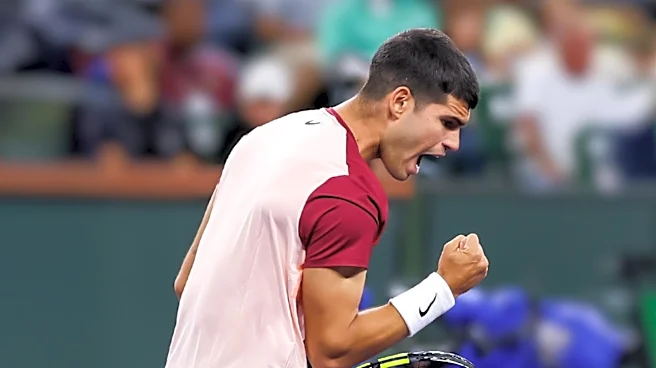
Carlos Alcaraz, ahead of defending his Japan Open title, has voiced a strong opinion against altering the Grand Slam format by removing best-of-five set matches. This discussion has gained traction within
the tennis community following his lengthy five-set contest against Ben Shelton at the US Open, which concluded at 3:33 AM. Alcaraz believes that eliminating the best-of-five format would 'kill the Grand Slam legacy,' emphasizing that these extended matches are what make Grand Slams unique and special. His stance is echoed by other players, including Frances Tiafoe and Taylor Fritz, who also support the current scoring format. Historically, the US Open experimented with best-of-three set matches in the first few rounds during the 1970s, with the 1978 US Open being the last major event to utilize this shorter format. Alcaraz also provided an update on his wrist injury, stating he has fully recovered and is training thoroughly, feeling better each day.
Why It's Important?
Alcaraz's strong defense of the best-of-five format highlights a significant debate within professional tennis regarding tradition versus player welfare and audience engagement. The potential shift to shorter matches could fundamentally alter the physical and mental demands placed on athletes, potentially changing the nature of Grand Slam champions. Maintaining the longer format preserves the historical challenge and endurance aspect that many consider central to Grand Slam prestige, distinguishing them from other tournaments. Conversely, proponents of shorter matches argue it could reduce player fatigue and injury risk, while also making matches more accessible and appealing to a broader audience with shorter attention spans. The outcome of this debate could influence future tournament structures, prize money distribution, and the overall fan experience, impacting the sport's commercial viability and its traditional identity.
What's Next?
The debate surrounding the Grand Slam format is likely to continue, with players, tournament organizers, and governing bodies weighing the pros and cons of potential changes. While Alcaraz and others advocate for maintaining the traditional best-of-five format, the conversation about player workload and match duration will persist, especially after grueling matches. Future discussions may involve exploring alternative solutions, such as scheduling adjustments or rule modifications, rather than a complete overhaul of the set format. The tennis community will closely monitor player feedback and fan engagement to determine if any formal proposals for change gain significant traction. For Alcaraz, his immediate focus is on defending his Japan Open title and continuing his recovery from a wrist injury, with his performance in upcoming tournaments potentially influencing his standing in these ongoing discussions.
Beyond the Headlines
The discussion about Grand Slam match length extends beyond mere game format; it touches upon the very essence of athletic endurance and the narrative of sporting heroism. Best-of-five matches are often seen as the ultimate test of a tennis player's physical and mental fortitude, creating epic contests that become legendary moments in sports history. Shortening these matches could diminish the 'hero's journey' aspect, where players overcome immense physical and psychological barriers over several hours. This could also impact the strategic depth of matches, as players might adopt different tactics if they know they only need to win three sets. The debate also reflects a broader societal trend towards instant gratification and shorter content consumption, challenging traditional sports to adapt without losing their core identity. The decision will ultimately reflect a balance between preserving tradition, ensuring player well-being, and evolving to meet modern audience expectations.