


What's Happening?
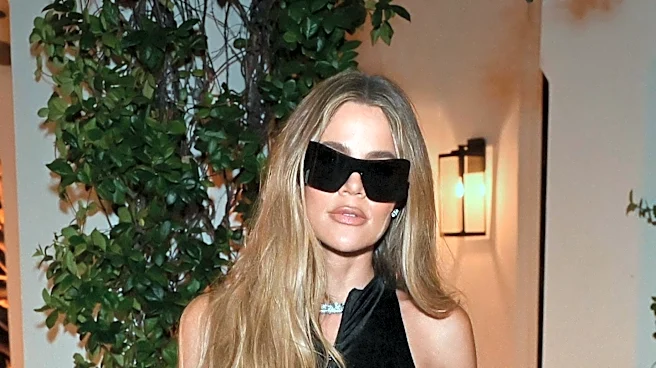
Khloé Kardashian has publicly stated her disinterest in joining 'The Real Housewives of Beverly Hills' or other competitive reality television formats. During an episode of her podcast, 'Khloé in Wonder Land,' with guest Paige DeSorbo, Kardashian explained
that she finds the cutthroat nature and the expectation to speak negatively about others unappealing. Having spent nearly two decades in reality television, primarily alongside her family in shows like 'Keeping Up with the Kardashians' and 'The Kardashians,' she is accustomed to a different dynamic. Kardashian emphasized that she has never experienced the competitive environment for screen time that she perceives in such shows, as her work has always been family-centric. She expressed that the concept of women fighting for airtime and gossiping about each other does not align with her preferences, despite not knowing the exact behind-the-scenes workings of 'The Real Housewives' franchise. Instead, Kardashian indicated a preference for hosting children's baking or competition shows, citing her enjoyment of programs like 'The Great British Bake Off' and the junior version of 'American Ninja Warrior.'
Why It's Important?
Khloé Kardashian's decision highlights a growing trend among established reality television personalities to seek out formats that align more closely with their personal values and current life stages. For the reality TV industry, this signals a potential shift in talent preferences, moving away from highly confrontational and drama-driven shows towards more positive or family-oriented content. This could influence production companies and networks to diversify their offerings to attract high-profile personalities. For Kardashian, who is a mother of two, True (eight) and Tatum (four), her interest in children's programming reflects a desire to integrate her professional life with her role as a parent, potentially expanding her brand into family-friendly entertainment. This move could also resonate with a segment of her audience that appreciates less confrontational content, potentially broadening her appeal beyond traditional reality TV viewers. The rejection of a major franchise like 'The Real Housewives' by a prominent figure like Kardashian underscores the evolving landscape of celebrity engagement with reality media.
What's Next?
Following her public statements, it is likely that Khloé Kardashian will continue to explore opportunities in family-friendly television, particularly in hosting roles for children's baking or competition shows. Her expressed interest could lead to discussions with production companies specializing in such content, potentially resulting in new projects that align with her vision. This shift might also encourage other reality TV personalities to re-evaluate their participation in competitive formats, potentially leading to a broader industry trend towards more collaborative or positive programming. For 'The Real Housewives of Beverly Hills' franchise, Kardashian's refusal means the show will need to continue seeking other personalities to maintain its cast dynamics, though her decision is unlikely to significantly impact the established franchise. Her focus will likely remain on her current family-centric reality series, 'The Kardashians,' and her personal brand, which may now increasingly emphasize her role as a mother and her preference for uplifting content.
Beyond the Headlines
Khloé Kardashian's stance on competitive reality television touches upon broader ethical and cultural implications within the entertainment industry. Her discomfort with the 'cutthroat' nature and the perceived necessity to 'talk s*** about people' reflects a critique of reality TV's often-exploitative elements, where conflict and negativity are frequently amplified for entertainment value. This raises questions about the psychological impact on participants and the ethical responsibilities of producers in creating such environments. Her preference for children's shows, particularly those focused on skill and positive competition, suggests a desire to contribute to media that fosters creativity and healthy development, contrasting sharply with the adult-oriented drama she has rejected. This pivot could signal a growing awareness among public figures about the kind of content they wish to endorse and be associated with, potentially influencing audience expectations and the types of narratives that gain traction in mainstream media. It also highlights the evolving definition of 'reality' in television, moving from unscripted conflict to more curated, aspirational, or educational formats.