





What's Happening?
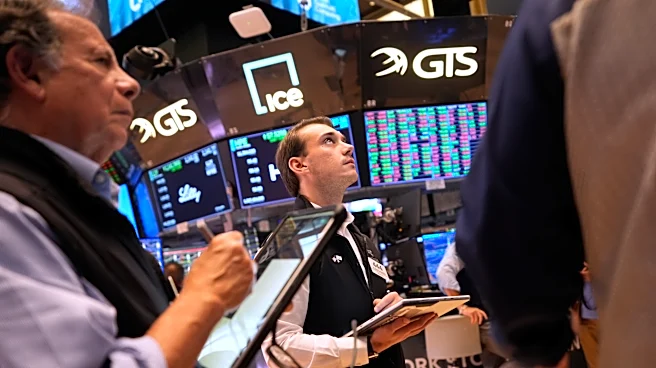
London-based certification company Isometric has successfully closed its Series A funding round, raising a total of $50 million. This includes a significant investment from Intercontinental Exchange (ICE), a major operator of energy and environmental
markets. The initial Series A round, announced in June, secured $40 million, led by AVP, Lowercarbon Capital, Plural, John Doerr, and Walter Kortschak. With the new backing from ICE and other investors such as Acario Innovation, BY Venture Partners, Dubai Future District Fund, Earth VC, Motion Ventures, One Capital, Plug and Play, Verb Ventures, and Legora founder Max Junestrand, Isometric's combined funding from its seed and Series A rounds now totals $75 million. Isometric specializes in developing certification technology that uses artificial intelligence (AI) and independent verifiers to validate industrial claims related to environmental, regulatory, and sustainability requirements. Their Certify platform publishes certificates with supporting data, calculations, and evidence on a public Registry. The company initially focused on carbon removal, certifying over 16 million tonnes, and has since expanded into industrial emissions, energy, fuels, and materials, serving clients like Microsoft, Anglo American, Boeing, and JPMorgan Chase.
Why It's Important?
This substantial investment in Isometric, particularly from a major financial market infrastructure provider like ICE, underscores a growing demand for verifiable environmental and sustainability claims within the industrial sector. As companies increasingly face scrutiny from customers, investors, and regulators regarding their environmental impact, independent certification becomes crucial. The integration of Isometric's AI-powered certification technology with ICE's market infrastructure and data capabilities could establish a new standard for transparency and accountability in environmental markets. This development is particularly relevant for U.S. industries undertaking large-scale projects in electrification, automation, and data center expansion, which require robust verification of their environmental compliance. The partnership aims to transform 'analogue markets' through digital infrastructure, potentially influencing how environmental credits and sustainability efforts are valued and traded, thereby impacting corporate sustainability strategies and investment decisions across various sectors.
What's Next?
Isometric plans to leverage the new funding and partnership with ICE to further develop its certification technology and expand its reach across various industrial sectors. The collaboration with ICE is expected to combine Isometric's verification capabilities with ICE's extensive market infrastructure, potentially leading to more standardized and widely accepted methods for certifying environmental claims. This could result in increased adoption of Isometric's Certify platform by more companies seeking to demonstrate compliance and sustainability. The focus on 'provable output' becoming 'financeable output' suggests a future where verified environmental performance directly influences financial market mechanisms and investment opportunities. This could also spur further innovation in AI-driven verification technologies and encourage greater transparency in environmental reporting across industries.
Beyond the Headlines
The investment in Isometric highlights a broader trend towards integrating advanced technology, specifically AI, into environmental governance and market mechanisms. This move could address the challenge of 'greenwashing' by providing independent, data-backed verification of environmental claims, thereby fostering greater trust among stakeholders. The emphasis on digital infrastructure for environmental markets suggests a shift towards more efficient and transparent systems for tracking and trading environmental assets, such as carbon credits. This development could also influence regulatory frameworks, pushing for more stringent and verifiable environmental reporting standards. Ultimately, the success of such initiatives could redefine corporate responsibility, making environmental performance a more tangible and financially impactful metric, and potentially accelerating the transition towards a more sustainable industrial economy.