





What's Happening?
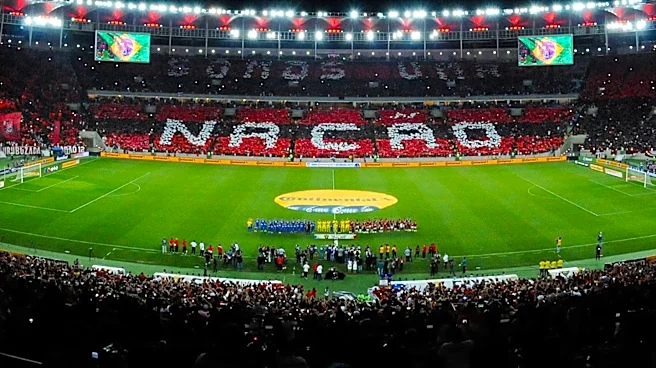
The Maracanã Stadium in Rio de Janeiro, Brazil, has been designated as the venue for both the opening match and the final of the 2027 Women’s World Cup. This historic 78,838-capacity stadium previously hosted the finals of the men’s World Cups in 1950
and 2014, as well as the Olympic football competitions in 2016. Brazil’s opening Group A match is scheduled for June 24, with the final set for July 25. FIFA has released the full schedule for all 64 matches of the tournament, which will feature 32 teams. This marks the first time the Women’s World Cup will be held in South America, and the Maracanã will join a select group of stadiums, including the Rose Bowl in Pasadena, California, that have hosted both men's and women's World Cup finals.
Why It's Important?
This decision is significant for the global landscape of women's sports, particularly in the U.S., as it elevates the profile and prestige of the Women's World Cup. The Maracanã's iconic status and large capacity will provide a grand stage for the tournament, potentially drawing record attendance and viewership. For U.S. women's soccer, which has a strong international presence and a history of success, playing in such a renowned venue could further inspire young athletes and expand the sport's fan base. The event's location in South America also broadens the geographical reach of women's football, fostering its development in new regions. The increased visibility and investment in the Women's World Cup contribute to the ongoing fight for gender equality in sports, influencing how women's athletic achievements are valued and supported globally, including in the U.S. This could lead to greater commercial opportunities and media coverage for women's sports leagues and athletes in the U.S.
What's Next?
With the Maracanã confirmed as the host for key matches, the focus will now shift to the logistical preparations for the 2027 Women’s World Cup. FIFA will continue with the qualification playoffs, leading to the official draw that will determine the group stage matchups. Brazil, as the host nation, will be preparing its teams and infrastructure to welcome the international event. For U.S. women's soccer, the next steps involve team preparation, player selection, and strategic planning to compete for the championship. The tournament's high-profile venues and expanded format are expected to generate significant media attention, which will likely translate into increased viewership and engagement in the U.S. as the event approaches. Discussions around the tournament will also likely include its potential economic and cultural impact on Brazil and the broader South American region.
Beyond the Headlines
The selection of the Maracanã for the Women's World Cup final carries profound symbolic weight, signifying a major step forward in the recognition and celebration of women's football on a global scale. By placing the women's final in a stadium historically associated with men's football glory, FIFA is actively challenging traditional gender norms in sports and promoting inclusivity. This move could inspire a new generation of female athletes and fans, particularly in regions where women's sports may still be developing. For the U.S., a nation with a strong legacy in women's soccer, this development reinforces the global momentum behind the sport and could lead to further investment in grassroots programs and professional leagues. The event also highlights the cultural exchange inherent in international sports, bringing diverse communities together and fostering a shared appreciation for athletic excellence, regardless of gender. It underscores the evolving narrative of sports as a powerful platform for social change and equality.