



What's Happening?
A recent report by Hotels.com indicates that 37% of Americans are now traveling more for work than they did before the COVID-19 pandemic. This surge is largely attributed to the growing 'bleisure' trend, where business trips are extended for leisure activities.
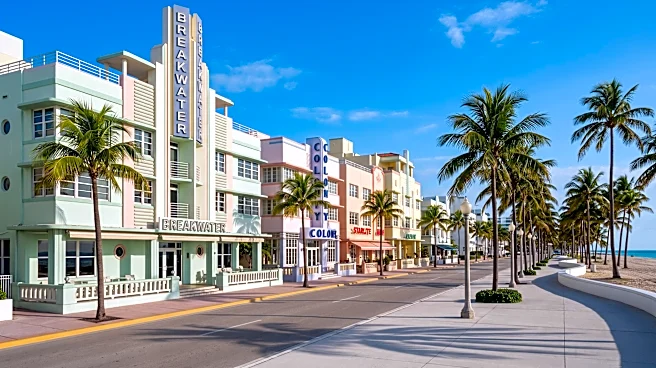
Technology workers and tradespeople are among the most frequent business travelers, with technology professionals traveling 50% more often than pre-pandemic levels. The report, titled 'Booked for Business,' found that business travelers spend an average of 10 nights a year away on work trips. Finance workers have the highest average daily allowance at $134, followed by technology workers at $131. The overall reported daily spending limit is $115, with government workers having the lowest allowance at under $79 a day. The average hotel budget for work travel is $236 per night, increasing to $264 for technology professionals. Key hotel preferences for business travelers include free breakfast (49%), loyalty rewards (39%), and flexible check-in (37%). New York, Los Angeles, and Miami are identified as top U.S. destinations for bleisure travel, with June and September being the busiest months for work trips.
Why It's Important?
This shift in business travel patterns has significant implications for the U.S. hospitality and travel industries. The increased frequency and duration of business trips, particularly those incorporating leisure, present new revenue opportunities for hotels, airlines, and local businesses in popular bleisure destinations. The demand for specific amenities like high-speed Wi-Fi, free breakfast, and loyalty programs will likely influence hotel investment and service offerings. The report highlights generational differences, with Gen Z travelers being more inclined to change routines and hotel choices, suggesting a need for personalized and flexible travel solutions. The emphasis on combining work and leisure also points to a broader change in corporate culture, where employee well-being and work-life balance are increasingly valued. This trend could lead to a more integrated approach to travel planning, with companies and individuals seeking platforms that seamlessly support both business and personal travel needs, as exemplified by Hotels.com's new business-travel features.
What's Next?
The continued growth of bleisure travel is expected to drive further innovation in the travel industry. Hotels and travel service providers will likely enhance offerings to cater to the specific needs of bleisure travelers, such as improved in-room workspaces, curated local experiences, and flexible booking options. Technology platforms, like Hotels.com's new features, will continue to evolve to allow users to save work-trip preferences, identify business-ready hotels, and earn rewards across both business and personal travel. Businesses may also re-evaluate their travel policies to better accommodate bleisure trips, potentially offering incentives or guidelines for combining work and leisure. The focus on employee experience during business travel could lead to increased demand for premium services and amenities. Furthermore, destinations that can effectively blend business infrastructure with appealing leisure activities, such as New York, Los Angeles, and Miami, are poised to see continued growth in this segment.
Beyond the Headlines
The rise of bleisure travel reflects a deeper cultural shift in the perception of work and personal life, particularly in the post-pandemic era. It blurs the traditional lines between professional obligations and personal pursuits, suggesting a greater desire for integrated experiences rather than strict separation. This trend could impact employee retention and satisfaction, as the ability to combine work with personal exploration might be viewed as a valuable perk. It also raises questions about the ethical considerations of mixing business expenses with leisure activities and how companies will manage such policies. The report's finding that many travelers adopt a 'different persona' on work trips highlights the psychological aspect of business travel, where individuals may feel a need to present a more professional or organized self. This could lead to a re-evaluation of corporate travel expectations and a greater emphasis on authentic experiences that allow travelers to be themselves, even while on business.