






What's Happening?
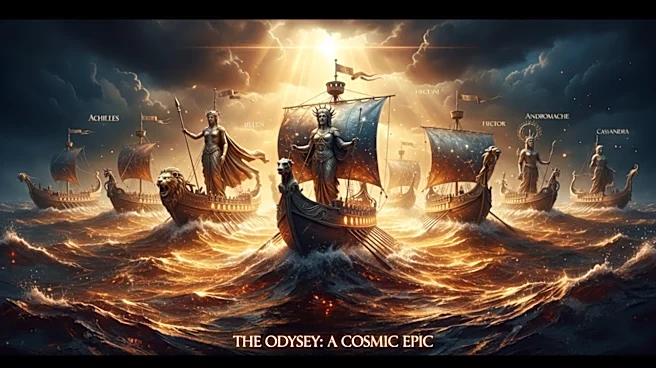
Christopher Nolan's latest film, 'The Odyssey,' is a monumental epic that delves into the cost of war and the longing for homecoming. The film, starring Matt Damon as Odysseus, adapts the classic tale from Homer, focusing on the emotional and psychological
toll of Odysseus's journey. Nolan's adaptation presents a narrative that intertwines the grandeur of mythological adventures with intimate human struggles, exploring themes of trauma, redemption, and the search for identity. The film's structure, featuring flashbacks and parallel plots, adds a dreamlike quality to the storytelling, enhancing the emotional depth of Odysseus's quest.
Why It's Important?
'The Odyssey' represents a significant achievement in filmmaking, showcasing Nolan's ability to blend large-scale cinematic spectacle with profound emotional narratives. The film's exploration of war's aftermath and the personal cost of heroism resonates with contemporary audiences, offering a reflection on the enduring impact of conflict. This thematic depth, combined with Nolan's signature visual style, positions 'The Odyssey' as a potential contender for major awards, further cementing Nolan's status as a leading director in the industry. The film's success could influence future adaptations of classical literature, encouraging filmmakers to explore similar narratives with modern sensibilities.
What's Next?
As 'The Odyssey' continues to captivate audiences, its performance at the box office and in award circuits will be closely watched. The film's reception could inspire further adaptations of classical works, potentially leading to a resurgence of interest in epic storytelling. For Nolan, the film's success may open new opportunities for ambitious projects, allowing him to explore different genres and narratives. Additionally, the film's themes may spark discussions on the portrayal of war and heroism in media, influencing future cinematic and cultural narratives.