





What's Happening?
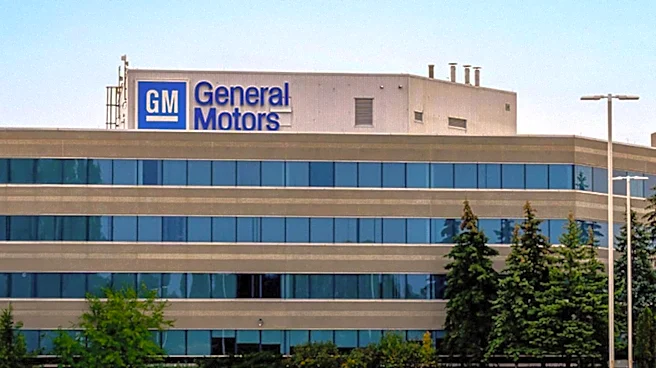
General Motors is actively recruiting a Senior Artificial Intelligence Machine Learning Scientist to advance its vehicle lifecycle management, diagnostics, and predictive maintenance capabilities. This role involves designing and deploying sophisticated
machine learning solutions, including the use of large language models (LLMs), generative AI, and real-time inference systems. The scientist will focus on building foundational machine learning models using complex engineering and vehicle telemetry data. Key responsibilities include developing anomaly detection, automated root-cause analysis, and predictive capabilities to identify issues like battery drain and software malfunctions earlier. The objective is to support faster issue resolution, reduce warranty claims, and minimize service visits by translating model outputs into actionable insights for engineers and service teams. The position requires a strong background in Python programming, deep learning, and experience with major ML frameworks such as PyTorch or TensorFlow.
Why It's Important?
This strategic hiring by General Motors underscores the automotive industry's increasing reliance on advanced AI and machine learning to improve product quality and customer experience. By integrating AI/ML into vehicle diagnostics and maintenance, GM aims to proactively address potential issues, which can significantly reduce operational costs associated with warranty claims and service. For consumers, this could translate into more reliable vehicles, fewer unexpected breakdowns, and potentially lower long-term ownership costs due as vehicles become more adept at self-diagnosing and predicting maintenance needs. The investment in these technologies also positions GM to maintain a competitive edge in a rapidly evolving market where software and data analytics are becoming as crucial as mechanical engineering. Furthermore, the development of robust predictive maintenance systems can enhance vehicle safety by identifying critical component failures before they occur, contributing to GM's vision of 'Zero Crashes, Zero Emissions and Zero Congestion'.
What's Next?
The successful candidate will be tasked with immediately building, evaluating, and deploying foundational machine learning models, with an initial focus on 12-volt battery health. The approaches developed for battery diagnostics are expected to be extended to other vehicle systems, including infotainment. This will involve close collaboration with engineering and AI colleagues to frame problems, validate findings, and integrate solutions into practical tools and workflows. The scientist will also be responsible for developing reliable data pipelines and inference workflows, and communicating results to both technical and non-technical stakeholders. The ongoing expansion of AI/ML capabilities within GM suggests a continuous effort to innovate in vehicle technology, potentially leading to more autonomous and self-optimizing vehicle systems in the future. The company's commitment to these advanced technologies indicates a long-term strategy to leverage data for enhanced product development and service delivery.
Beyond the Headlines
The push by General Motors into advanced AI/ML for vehicle diagnostics highlights a broader industry trend towards 'software-defined vehicles.' This shift implies that the value and functionality of a vehicle will increasingly be determined by its software and data processing capabilities, rather than solely its hardware. This has profound implications for the automotive supply chain, workforce development, and regulatory frameworks. Ethical considerations around data privacy and the security of vehicle data will also become more prominent as cars collect and process vast amounts of information. Moreover, the ability of AI to predict failures could lead to new business models for car manufacturers, such as subscription-based predictive maintenance services or enhanced insurance offerings. The demand for specialized AI/ML talent, as evidenced by this job posting, indicates a significant transformation in the skills required within the automotive sector, moving towards a blend of traditional engineering and cutting-edge data science.